


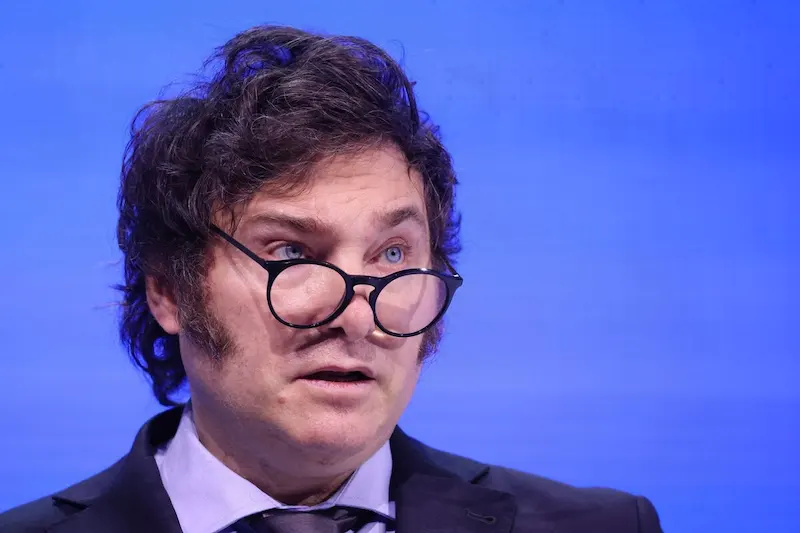


In a surprising move, the legislature of La Rioja, a small province in Argentina, has approved the creation of a new quasi-currency, going against President Javier Milei's push for austerity measures. This decision, reminiscent of past economic crises in the country, has raised concerns among economists and citizens alike.
La Rioja Governor Ricardo Quintela, a member of the opposition Peronist coalition, requested authorization to launch the new currency, called "bocade," in order to pay a portion of public servants' salaries. This request came after a strike by La Rioja's local police force and protests from health workers. The legislature has approved the issuance of up to 22.5 billion pesos ($27.5 million) worth of bocades to supplement workers' pay in the national currency.
The exact form that the bocade will take is uncertain at this stage. The legislature has suggested that Governor Quintela may choose to print physical banknotes or register the funds digitally in workers' bank accounts. However, whether businesses will accept the new currency as a form of payment remains to be seen.
Governor Quintela has blamed President Milei's austerity measures for the province's inability to keep up with the staggering inflation rate of 211%. He argues that introducing the bocade will help improve public administration workers' salaries and stimulate the local economy. Considering that government workers outnumber private sector workers in La Rioja, their well-being is crucial for the province's overall economic health.
It is worth noting that La Rioja has dabbled in alternative currencies in the past. Just like several other Argentine provinces, La Rioja issued its own quasi-currency, also named bocade, in the aftermath of the country's debt crisis in 2001. Buenos Aires province, the most populous in Argentina, also introduced the so-called patacones during that time, which were later converted into pesos by the national government.
President Milei, who had previously advocated for the adoption of the US dollar as the main currency in Argentina, ironically welcomed La Rioja's decision. In a sarcastic social media post, he stated that provincial currencies are welcome to compete but clarified that they will not receive any bailout from the national government, unlike what happened in the past.
The creation of a new quasi-currency in La Rioja raises concerns about the stability and effectiveness of such measures in tackling economic challenges. While Governor Quintela believes that the bocade will bring relief to public workers and revitalize the local economy, skeptics worry about the potential consequences and whether this move could exacerbate Argentina's already fragile economic situation. Time will tell how the experiment with the bocade unfolds and whether it will prove to be a viable solution for La Rioja's economic woes.