


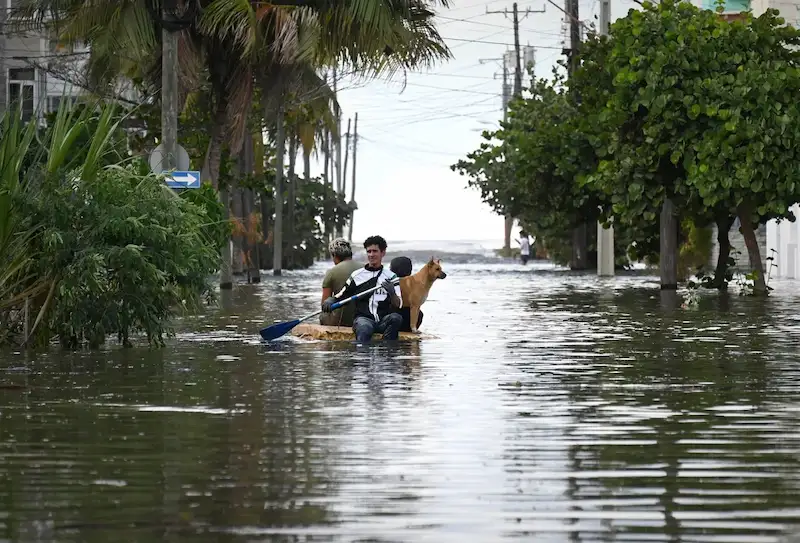


An unprecedentedly strong cold front slammed Cuba's north coast on Tuesday, wreaking havoc with its white-capped waves that flooded streets with seawater. The capital, Havana, was not spared from the impact, as the city was adorned with blowing trash and littered with downed branches. The powerful gusts reached up to 62 miles per hour (100 kilometers per hour) in western parts of the island, reminiscent of the squalls and strong winds that had recently battered Florida. The unusual weather conditions also sent temperatures plummeting to as low as 55 degrees Fahrenheit (12 degrees Celsius), a stark contrast to Cuba's typically warmer climate.
Throughout the night, Havana residents remained indoors, experiencing flickering lights and intermittent power outages. However, come dawn, they cautiously emerged bundled in jackets and hats, braving the chilly weather. To their surprise, they discovered city streets transformed into coastal rivers, carrying with them jellyfish, seaweed, and debris several blocks inland. For many residents like Jaqueline Dalardes, strolling along the city's Malecón esplanade, this extreme cold was an entirely new experience. She remarked, "This really is something new... we're not used to this kind of cold. The climate has changed."
Havana, with its coastal positioning on the Gulf of Mexico, stands as one of the most vulnerable cities in the face of rising sea levels and intensifying storms resulting from human-induced climate change. Scientists and city planners have long warned about the increasing risks associated with these environmental shifts. Disturbingly, more than one-third of Havana's 2.2 million inhabitants reside in areas highly susceptible to encroaching waters, according to the UN Development Programme.
The consequences of rising sea levels pose a significant threat not only to Havana but to many coastal cities worldwide. Additionally, low-lying states in the South Pacific Ocean could potentially disappear from the map entirely. Urgent action and sustainable measures are crucial in combating the effects of climate change and protecting vulnerable communities. As Cuba experiences this unprecedented cold front and the associated flooding, it serves as yet another reminder of the urgent need to address climate change issues on a global scale. The wellbeing of cities like Havana, dependent on both their historical significance and vibrant communities, hang in the balance.