


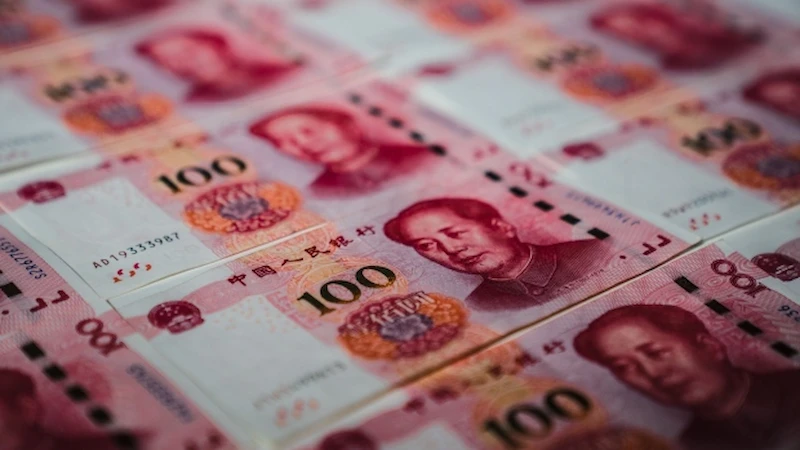


As China's economy gears up to resume activities after the Lunar New Year break, investors are diligently seeking out cost-effective strategies to shield themselves against potential losses in the value of the yuan. Implied volatility measures for various timeframes have dwindled to levels not witnessed since 2022, prompting a surge in interest towards options as a viable safeguard against a significant devaluation of the Chinese currency.
The diminishing implied volatility in short-dated options for the offshore yuan has been a notable trend since reaching its zenith in October 2022. Currently, both one- and three-month implied volatilities are hovering around their lowest points in two years, making the purchase of protection through options an attractive prospect. Meanwhile, the nine-month implied volatility, extending beyond the US presidential election in November, has also seen a dip, inching closer to levels reminiscent of the calm seen in August 2022 prior to spikes in volatility.
Renowned FX trader Brent Donnelly emphasized the potential benefits of utilizing options as a hedge against yuan depreciation, particularly in the current climate where anti-China sentiments prevail in the political arena. Donnelly suggested a one-year 7.60 USD/CNH call option to clients early this February at a time when the currency pair was trading at 7.2250. This approach presents a cost-effective hedge likely to offer protection irrespective of the election outcome. The looming economic challenges faced by China further compound the yuan's vulnerability, leading to a multitude of paths pointing towards depreciation with limited avenues for strengthening.
Echoing similar sentiments, Societe Generale strategist Kiyong Seong advised investors to leverage the historically low prices by acquiring three-month USD/CNH risk reversals as a strategic measure against potential depreciation. Seong noted that the yuan's subdued volatility is primarily influenced by the PBOC fixing, which has exhibited minimal movement in recent months. Should the yuan weaken past 7.25, breaching the weaker end of the daily reference rate band, a devaluation in the PBOC fixing would become inevitable. This shift could trigger a significant bearish reaction in the market, propelling the USD/CNH pair towards the closely monitored 7.30-7.35 range.
Recent US economic data hinting at persistent inflationary pressures has dashed hopes of a Fed rate cut in the first half of 2024, escalating speculation around a potential yuan depreciation. Leading financial institutions like Citigroup and voices like former Treasury Secretary Larry Summers are cautioning investors to brace for the possibility of Fed rate hikes instead of the currently priced-in cuts. Such market dynamics are heightening the appeal of utilizing options as a strategic tool to navigate the evolving landscape marked by a complex interplay of economic and geopolitical factors.