


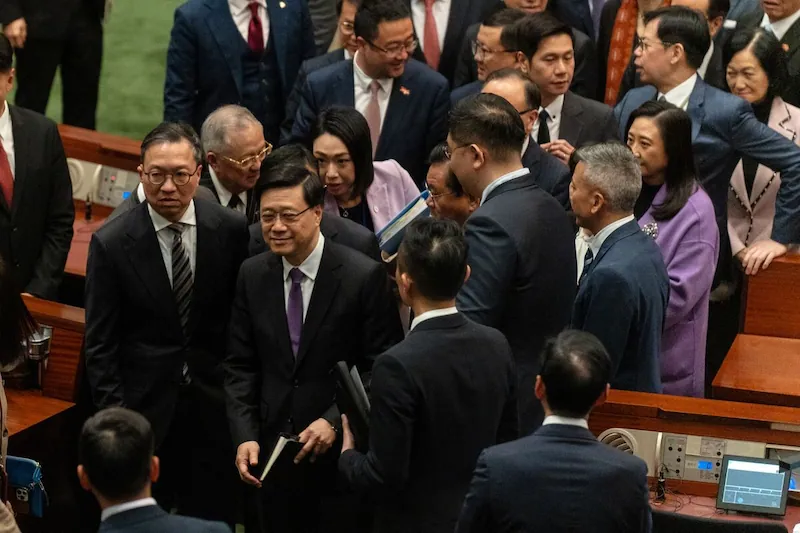


The rapid passage of a controversial domestic security law in Hong Kong has raised alarms from international allies such as the US, EU, and UK. The legislation, known as Article 23, was unanimously approved by Hong Kong's legislature in a swift session, marking the quickest passing of a bill since the city's handover to Chinese control in 1997.
Critics, including the Biden administration and European Union, have expressed concerns over the vague wording of the law, fearing that it could further restrict freedoms and political pluralism in the global finance hub. The UK, which hosts a significant number of former Hong Kong residents, has also condemned the move, stating that it undermines China's obligations under the 1984 treaty that oversaw the city's return to Chinese rule.
The new law introduces severe penalties for offenses such as treason and insurrection, with life imprisonment as a potential punishment. It also expands the government's authority to suppress political opposition and includes broadly defined state secrets offenses, aligning Hong Kong more closely with China's stringent legislation around espionage. Foreign investors and analysts have expressed concerns over the impact of these provisions on economic and financial information flows in the city.
Since the mass pro-democracy protests in 2019, President Xi Jinping's government has tightened its grip on Hong Kong, culminating in the imposition of a national security law in 2020. This latest move to pass local security legislation has sparked criticism and fears of further crackdowns on dissent in the semi-autonomous region.
Despite assertions from Hong Kong officials that the law has broad public support, concerns remain about its potential impact on academic, international, media, and financial sectors within the city. Amendments made during the bill's deliberations have granted the city's leader enhanced powers to protect national security and have expanded police authority to detain and investigate national security suspects.
As Hong Kong moves forward with enacting the security law, the international community continues to monitor the situation closely. The implications of this legislation on Hong Kong's autonomy, freedoms, and global reputation as a financial hub remain a point of contention and scrutiny among key stakeholders.