


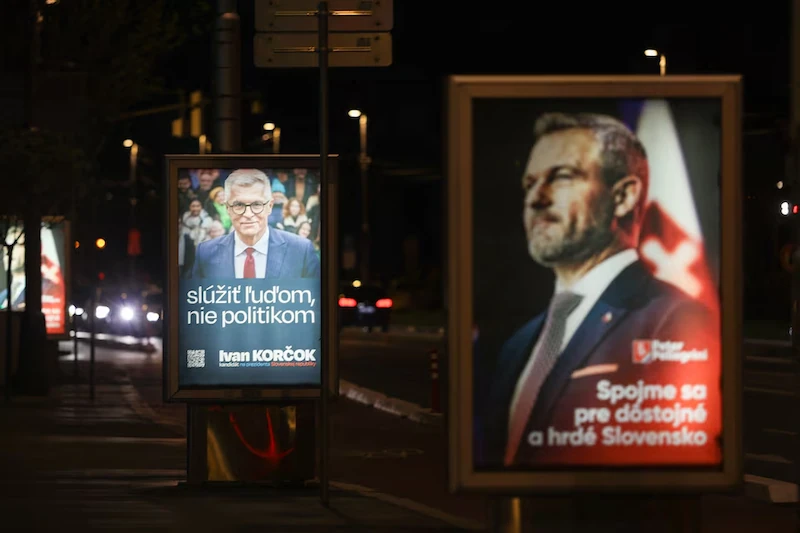


Slovakia held its presidential elections on Saturday, presenting voters with a crucial decision between candidates with starkly differing political ideologies. The choice was between Ivan Korcok, a pro-Western opposition figure, and Peter Pellegrini, representing the ruling nationalist left coalition led by Prime Minister Robert Fico. At the heart of the election was the question of whether Fico would secure an ally in the presidential office or potentially face opposition to his pro-Russian stance and controversial plans concerning criminal law and media reforms.
With the outcome forecasted to be a close call, both candidates made their final appeals to voters before a campaigning moratorium was enforced. Ivan Korcok, the surprise front-runner from the first round, positioned himself as a candidate dedicated to enhancing the nation's well-being and solidifying Slovakia's Western alliances. On the other hand, Peter Pellegrini aimed to portray Korcok as a warmonger for supporting Ukraine's militarization, although Korcok refuted such claims.
Slovakia's presidency holds limited executive powers, primarily revolving around the ability to veto legislation or challenge it in the constitutional court. Given Fico's proposed reforms, especially those aimed at reducing penalties for corruption, the selection of a president who either aligns with or opposes these initiatives could prove pivotal in determining the country's future. Korcok has adamantly advocated against Fico and his coalition holding key governmental positions, emphasizing a clear stance on Slovakia's geopolitical orientation.
Despite differing campaign strategies, both candidates reassured voters of their commitments to Slovakia's existing foreign policy direction. Outgoing President Zuzana Caputova, known for her human rights advocacy, criticized the fear-mongering tactics employed during the campaign. She firmly rejected the idea that either Pellegrini or Korcok would entangle Slovakia in conflicts abroad, ensuring the country's stability and security.
Korcok, a seasoned diplomat with prior roles in the EU and the U.S., brings a wealth of international experience to the table, emphasizing Slovakia's historical ties with Ukraine. Meanwhile, Pellegrini, having distanced himself from Fico to establish a more centrist and liberal political stance, seeks to maintain Slovakia's EU and NATO commitments while challenging Korcok for the presidency.
As polling stations closed and initial projections awaited, the nation braced for the election results that would shape its political landscape going forward. Whether Korcok's pro-Western vision or Pellegrini's nationalist perspective would prevail remained uncertain, setting the stage for a pivotal moment in Slovakia's political evolution.