


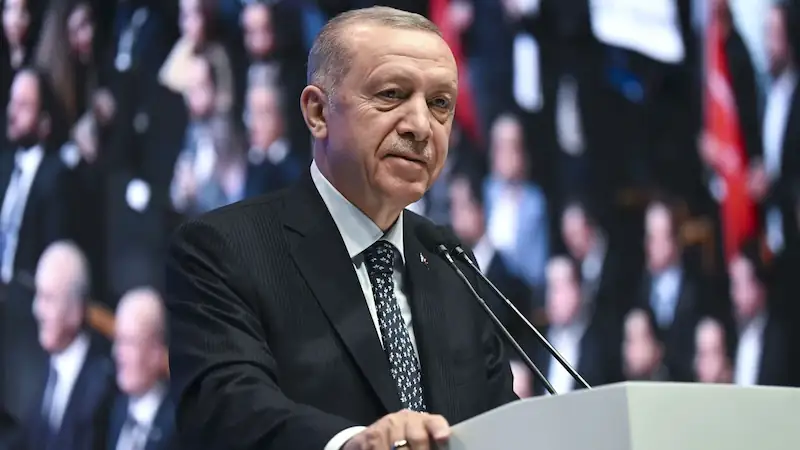


Turkey's President Recep Tayyip Erdogan has canceled two days of campaigning ahead of the country's crucial elections next month after falling ill during a live televised interview. The president, who is facing a tough battle to retain power, had to cut short the interview due to a "serious stomach flu."
Although Erdogan scrapped his public events to rest, he appeared via video link for the inauguration of the Akkuya nuclear power plant on Thursday afternoon. Russian President Vladimir Putin virtually attended the ceremony, and before the event, the two leaders spoke on the telephone, discussing "developments in the Russia-Ukraine war and the work on the grain agreement." Erdogan also thanked Putin for his contributions to the nuclear plant during the conversation.
Despite rumors circulating on social media that Erdogan was critically ill in hospital after suffering a myocardial infarction, the presidency's Communications Director Fahrettin Altun dismissed them, saying: "No amount of disinformation can dispute the fact that the Turkish people stand with their leader."
The upcoming election is perhaps the most crucial in Turkey's modern history, coming just months after a deadly earthquake rocked the country's southeast and amid soaring inflation and a currency crisis. Erdogan, who is 69, is hoping to extend his power into a third decade, but his re-election is far from a political certainty.
In a significant setback to Erdogan and his Justice and Development Party, the pro-Kurdish Peoples' Democratic Party (HDP) announced last month that it would not put forward its own presidential candidate. Analysts say this move allows HDP supporters to vote for Erdogan's main rival, the head of the Republican People's Party, Kemal Kilicdaroglu, who represents the six-party Nation Alliance opposition bloc.
Kilicdaroglu is the strongest contender to run against Erdogan in years, and analysts suggest that the HDP is the kingmaker in the elections. The Kurds are the biggest minority in Turkey, making up between 15% and 20% of the population, according to Minority Rights Group International.