


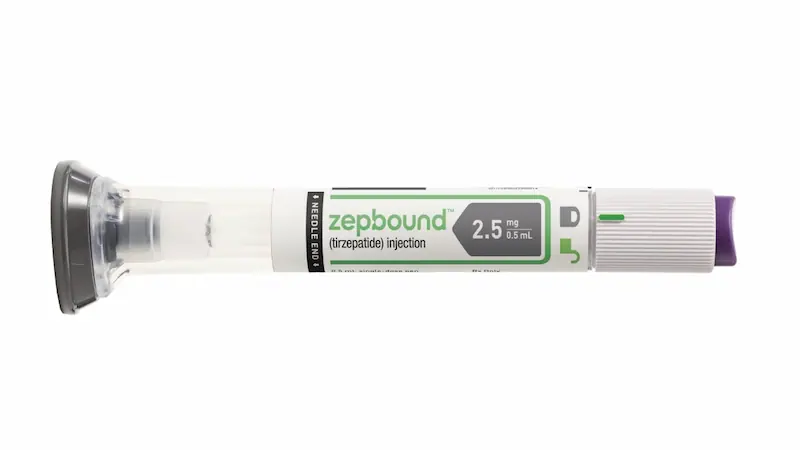


Exciting news has emerged from Eli Lilly, the drug manufacturer, regarding the potential benefits of their weight loss drug, Zepbound, for individuals suffering from obstructive sleep apnea. The company announced on Wednesday its intentions to submit trial data to the US Food and Drug Administration in hopes of expanding Zepbound's approved uses to include the treatment of sleep apnea. This development marks a significant advancement in the medical field as obstructive sleep apnea, a condition where breathing stops intermittently during sleep, affects around 100 million individuals globally and can lead to serious health complications such as heart disease, heart failure, and stroke.
While obstructive sleep apnea is more common in older individuals, it often manifests in people who are overweight or obese. The accumulation of fat around the upper airway can block normal breathing during sleep. Past research has indicated that weight loss can help alleviate symptoms of sleep apnea. Zepbound, initially approved for the treatment of obesity in November, contains the active ingredient tirzepatide, which was previously approved in 2022 for managing type 2 diabetes under the name Mounjaro. Results from preliminary studies conducted by Eli Lilly have demonstrated promising outcomes for individuals with obesity and obstructive sleep apnea who received Zepbound compared to those who did not.
The trials included over 400 adult participants and showed that those treated with the drug experienced improvements in their sleep apnea. Notably, individuals who were unable or unwilling to use positive airway pressure (PAP) therapy, a common treatment for sleep apnea, saw significant reductions in the number of breathing events during sleep while on Zepbound. Additionally, participants who also lost weight while on the drug exhibited even greater improvements in their sleep apnea symptoms. The data revealed that Zepbound not only helped individuals manage their weight, with a substantial reduction in mean body weight, but also led to a significant decrease in the number of breathing events per hour in those with moderate-to-severe obstructive sleep apnea.
Furthermore, individuals using or considering PAP therapy experienced enhanced outcomes when taking Zepbound, with substantial reductions in breathing events during sleep compared to those on a placebo. These individuals also saw notable weight loss alongside improvements in their sleep apnea condition. While the results are yet to undergo peer-review and publication in a medical journal, Eli Lilly plans to present further details at the upcoming meeting of the American Diabetes Association in June. Overall, the potential extension of Zepbound's usage to include the treatment of obstructive sleep apnea poses a promising development for individuals struggling with this prevalent and serious sleep disorder.