


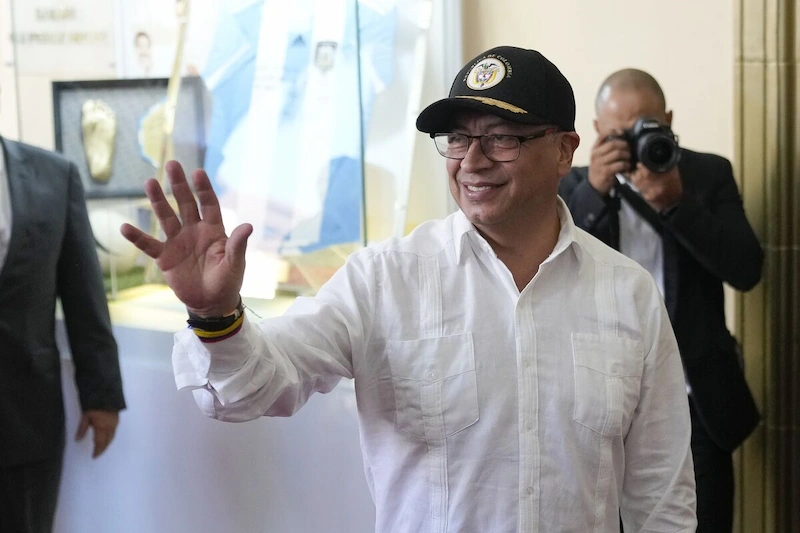


In a significant win for Colombian President Gustavo Petro, the Senate has given its approval to his proposed pension reform bill. This milestone marks a crucial step towards reshaping the country's pension system under the leadership of the leftist president. The approved reform would see the government take on the management of a substantial portion of worker contributions, with private pension funds continuing to handle the remainder. This shift in management structure is aimed at improving the overall efficiency and sustainability of Colombia's pension system.
Under the newly approved bill, a portion of worker salaries, capped at 2.3 times the minimum wage, will be directed towards the public pension system, while the remaining funds will flow into private pension schemes. Currently, private pension funds receive the lion's share of worker contributions, accounting for 75% of the total volume, as estimated by Corredores Davivienda. This reform seeks to strike a balance between the public and private sectors in managing pension funds, providing more diversified and stable retirement benefits for Colombian workers.
President Petro, who has been facing dwindling popularity with a disapproval rating of 60% in recent polls, will likely view this Senate approval as a much-needed win for his administration. The successful passage of the pension reform bill underscores Petro's commitment to addressing key social and economic challenges facing the country, despite facing significant opposition.
One of the key features of the reform is the creation of a savings fund managed by the central bank, dedicated to funding future pension liabilities. The government projects that this fund could amass up to $320 billion by 2052, inclusive of financial returns. This innovative approach aims to ensure the long-term sustainability of the pension system and provide better security for retirees in the years to come.
The pension reform is expected to come into effect on July 1, 2025, pending approval by the lower house of Congress. The bill includes a provision for a management fee of up to 0.7% on assets held by private pension funds, replacing the current upfront levy paid by workers when contributing to social security. Industry estimates suggest that this fee could be applied to around $49 billion in pension fund assets, according to the Asofondos pension fund association.
The final hurdle for the bill lies in securing two more votes in the lower house, where the government holds a majority. With this latest development, Colombia seems poised to embark on a new chapter in its pension system, guided by President Petro's vision for a more equitable and sustainable retirement framework.