


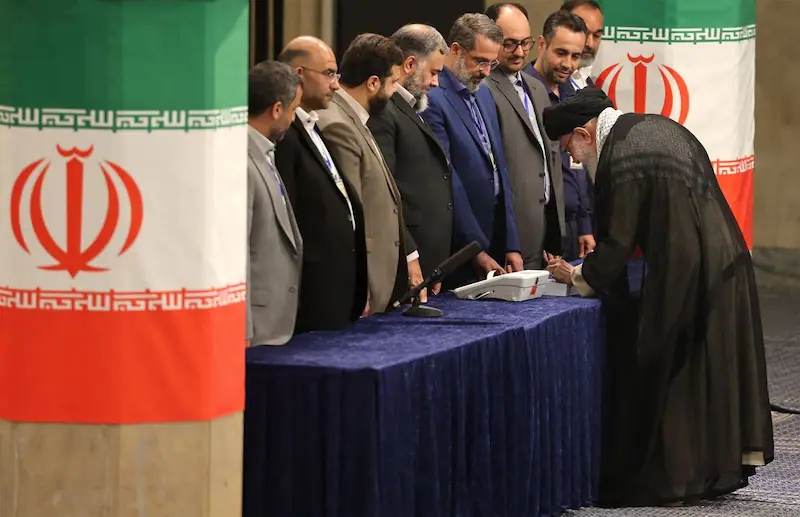


Amidst the backdrop of a stagnant economy and deep-rooted opposition to the ruling theocratic system, Iran's snap presidential election commenced on Friday. Polling stations opened across the Islamic Republic, showcasing predominantly female voters in traditional religious attire, with sparse signs of young participation.
Previous elections in Iran witnessed record low turnouts, reflecting the widespread discontent and dissent against the ruling clerical establishment under Supreme Leader Ayatollah Ali Khamenei. Notably, reformist politician Mahmoud Sadeghi observed a lower-than-expected turnout in central Tehran, echoing concerns about public engagement.
Four candidates are in the fray: reformist Masoud Pezeshkian, hard liners Saeed Jalili and Mohammad Baqer Qalibaf, and conservative cleric Mostafa Pourmohammadi. The election was called following the tragic demise of Ebrahim Raisi in a helicopter crash last month.
Iran's economy has been gravely impacted by stringent US sanctions post the US withdrawal from the nuclear deal in 2018. The currency devaluation and economic hardships have fueled public discontent against the ruling clergy and the Islamic Revolutionary Guard Corps.
In a bid to boost voter turnout, Ayatollah Khamenei urged the public to take the electoral process seriously. However, indications suggest that the youthful and urban demographic may exhibit lesser enthusiasm compared to the more devout and hardline supporters of Khamenei.
Videos circulating on social media purportedly show potential protests outside Iranian embassies, where ballot boxes have been arranged for expatriates. While official estimates predict turnout between 48% to 53%, far below previous elections, the final figures are yet to be released.
The election outcome will not only shape Iran's domestic politics but also its global relations amidst ongoing economic challenges and internal dissent.