


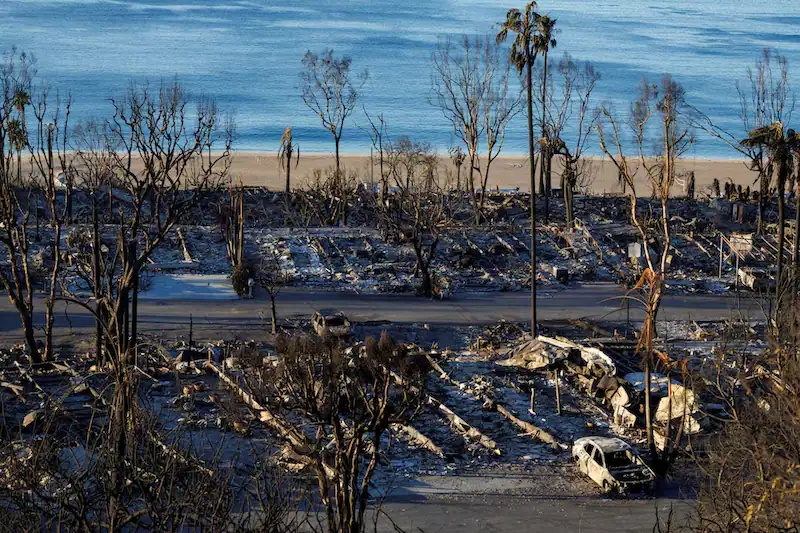


Los Angeles is facing a critical test as powerful wind gusts and bone-dry humidity continue to fuel monstrous fires that have been raging since last week. Despite a brief respite from strong winds in the past 24 hours, local officials are urging residents to remain vigilant and prepared to evacuate at a moment's notice as conditions worsen on Wednesday.
With 6.5 million people under a critical fire threat, the National Weather Service has forecasted winds of 20 to 40 miles per hour, with gusts reaching up to 70 mph, and humidity levels dropping into the single digits throughout the day. This dangerous combination of weather conditions has further dried out the brush, heightening the risk of fire, according to Los Angeles City Fire Chief Kristin Crowley.
The death toll from the fires has reached 25, with over 12,000 structures damaged or destroyed. Entire neighborhoods have been reduced to ash and rubble, with only chimneys standing in some homes. As 82,400 residents remain under evacuation orders and 90,400 face evacuation warnings, County Sheriff Robert Luna emphasizes the urgency of the situation.
Despite the milder-than-expected winds on Tuesday allowing firefighters to gain control over some smaller brush fires, the danger persists. On Wednesday, strong winds up to 40 mph posed a renewed challenge to firefighting efforts. However, the 8,500 firefighters from multiple states and countries have managed to hold the line on the Palisades and Eaton fires for a second consecutive day.
The Palisades Fire, spanning 23,713 acres, and the Eaton Fire, covering 14,117 acres, have seen minimal growth in the past 24 hours. Aerial support, alongside ground crews equipped with hand tools and hoses, have been battling the blazes relentlessly. Despite occasional grounding of aircraft due to high winds, progress in containment has been made.
In response to questions regarding the deployment of firefighters after the fires broke out on January 7, Fire Chief Kristin Crowley assured that all possible resources were mobilized promptly. The enduring dry conditions in Southern California, coupled with relentless Santa Ana winds, have turned the region into a tinderbox, propelling embers miles ahead of the fires.
Private forecasts estimate the total damage and economic loss from the fires to be between $250 billion and $275 billion, potentially surpassing Hurricane Katrina as the costliest natural disaster in U.S. history. With the fires continuing to pose a severe threat, the community remains on high alert, prepared to face the challenges that lie ahead in the ongoing battle against the devastating blazes in Los Angeles.