


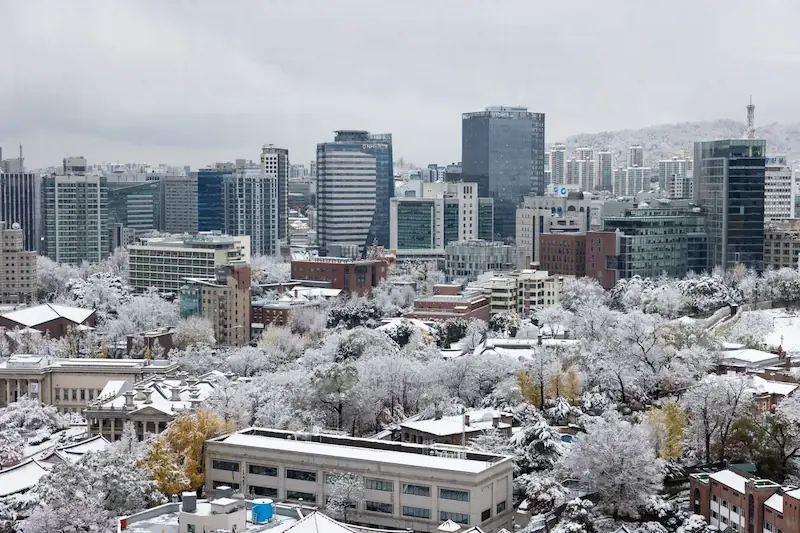


In the realm of luxury real estate, Asian cities like Seoul, Dubai, and Tokyo are emerging as hotspots for affluent property investors. While established markets in New York and London experienced a decline in prime property prices, newer players in Asia saw significant growth in the final quarter of 2024.
In contrast to New York's 0.3% dip and London's 1% decrease in luxury home prices, Seoul witnessed a remarkable 18% surge, followed closely by Dubai at 17% and Tokyo at 13%. These cities have quickly become favored destinations due to a combination of economic prosperity and an influx of wealthy individuals seeking high-end living spaces.
Seoul's housing market remained resilient despite recent political uncertainties, marking a stark contrast to other global cities grappling with instability. Meanwhile, Dubai has upped the ante in luxury real estate, with developers constructing opulent $100 million mansions to entice the elite global elite. Tokyo, on the other hand, has seen a surge in foreign interest driven by a depreciating yen, despite higher borrowing costs.
The Knight Frank report reveals a shift in the dynamics of the luxury real estate landscape, with prime property prices showcasing a turning point amidst robust economic growth and growing demand from affluent investors. While inflation and interest rates have somewhat tempered growth, the overall trend remains positive. Of the 44 cities analyzed, 34 experienced year-over-year price appreciation, propelling the prime property index to its strongest performance since the first quarter of 2024, with an annual growth rate of 4.1%.
As Asian cities rise to the forefront of luxury real estate, the contrasting fortunes of Western markets underscore a tale of two real estate worlds. With economic factors shaping investment patterns and driving demand in different directions, the global luxury housing market continues to evolve, offering both challenges and opportunities for investors worldwide.