


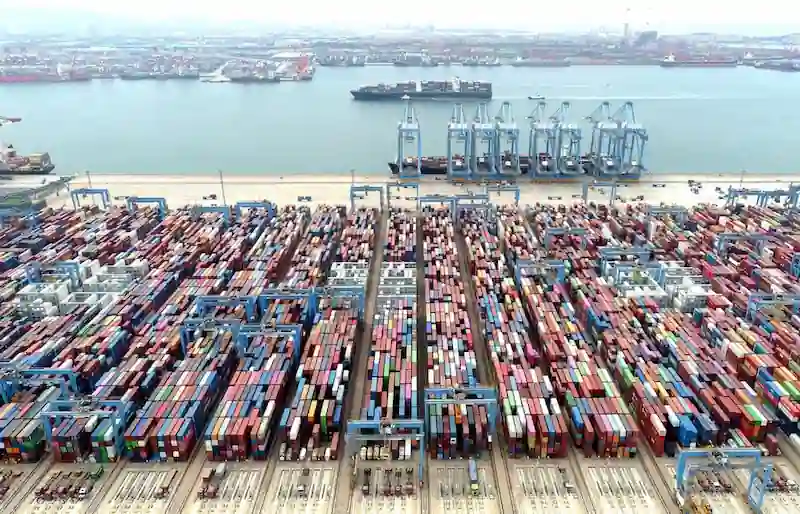


China's economic recovery is facing headwinds as imports continue to decline and export growth slows. In April, imports to the country fell by 7.9% year on year, extending the 1.4% decline seen in the previous month. Meanwhile, exports grew by 8.5%, easing from the 14.8% surge in March. These figures have reinforced concerns over feeble domestic demand, despite the lifting of COVID-19 restrictions, and have heaped pressure on an economy that is already struggling with cooling global growth.
While China's economy grew faster than expected in the first quarter, thanks to robust services consumption, factory output has lagged. The latest trade numbers point to a long road ahead before regaining pre-pandemic momentum at home. Economists had predicted no growth in imports and an 8.0% increase in exports, making the actual figures a disappointment.
Chinese government officials have repeatedly warned of a "severe" and "complicated" external environment, with mounting recession risks for many of China's key trading partners. Last month's sharp deterioration in trade flows has only renewed worries about the state of external demand and the risks posed to the domestic economy, especially given the frail recovery from a year earlier when inbound and outbound shipments were severely disrupted by China's COVID-19 restrictions.
The downturn in imports also suggests that the world economy will not be able to count much on China's domestic engine of growth. As the nation re-exports some of its imports, it reinforces the extent of weakness in some of its major trading partner economies. For example, the 15.3% drop in semiconductor imports indicates the scale of the demand-pullback in the re-export market for such parts.
Analysts say that the sharp global monetary policy tightening campaign of the past 12-18 months, and recent Western banking stress, remain concerns for the revival prospects of both China and the worldwide economy. Shipments growth to ASEAN slowed to 4.5% in April from 35.4% the previous month. The region is China's largest export partner.
The recent official manufacturing purchasing managers' index for April showed new export orders contracting sharply, underlining the challenge facing Chinese policymakers and businesses hoping for a robust post-COVID economic recovery. China's first-quarter GDP data last month, while offering some relief, also raised doubts about the demand outlook due to property market weakness, slowing prices, and surging bank savings.
The government has stepped up a range of policy support measures and is aiming for a modest GDP growth target of around 5% for this year, after badly missing the 2022 goal. However, given the deteriorating global economy, it is looking more likely that the government will step in to support the manufacturing sector's labor market through fiscal stimulus. Iris Pang, chief China economist at ING, warns that "the global economy is deteriorating and will weaken China's manufacturing sector."