


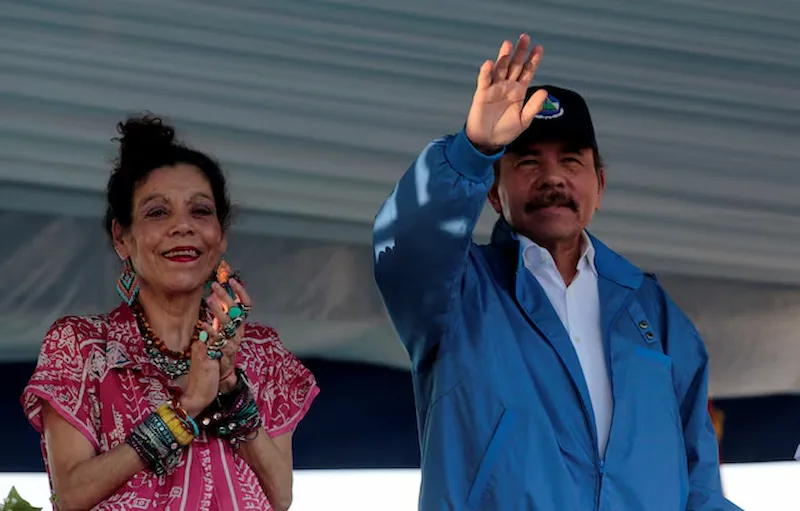


In a bold and definitive move, Nicaragua announced its withdrawal from the United Nations Human Rights Council following the release of a damning report that exposed widespread human rights violations under the leadership of President Daniel Ortega and Vice President Rosario Murillo. The decision, declared as "sovereign and irrevocable" by Murillo, signifies the country's refusal to engage in any further activities associated with the Human Rights Council and its auxiliary mechanisms.
The report, made public just a day earlier, portrays Ortega's regime as having effectively transformed Nicaragua into an authoritarian state, eradicating any semblance of independent institutions. The UN experts have called for urgent legal actions to be taken against the Nicaraguan authorities, citing a disturbing pattern of human rights abuses that align with crimes against humanity.
However, Ortega's government has consistently shrugged off international criticisms and reports from organizations like the UN and the Organization of American States, dismissing them as part of a targeted campaign against it. Murillo vehemently denied the allegations laid out in the report, branding them as baseless falsehoods and slander.
As discussions on the report continued at the Human Rights Council, a number of countries expressed disappointment at Nicaragua's decision to opt out. Spain highlighted the worrying trend, with Nicaragua becoming the third nation to withdraw from the council in a matter of days, following in the footsteps of Israel and the United States.
Ecuador, speaking on behalf of a coalition of countries, emphasized Nicaragua's obligation to uphold its international human rights commitments and saw the withdrawal as a troubling attempt to evade responsibility. In contrast, Venezuela criticized the report and accused the Council of applying double standards and politicizing human rights issues.
Nicaragua had previously faced significant unrest in 2018 when a government crackdown on dissent led to over 350 deaths and drew global condemnation for its human rights violations. The report also implicated the Nicaraguan army in the aggressive suppression of protests, contradicting prior denials from the authorities.
The decision by Nicaragua to disengage from the UN Human Rights Council underscores a growing rift between the country and the international human rights community, raising concerns about accountability and respect for human rights in the region.