


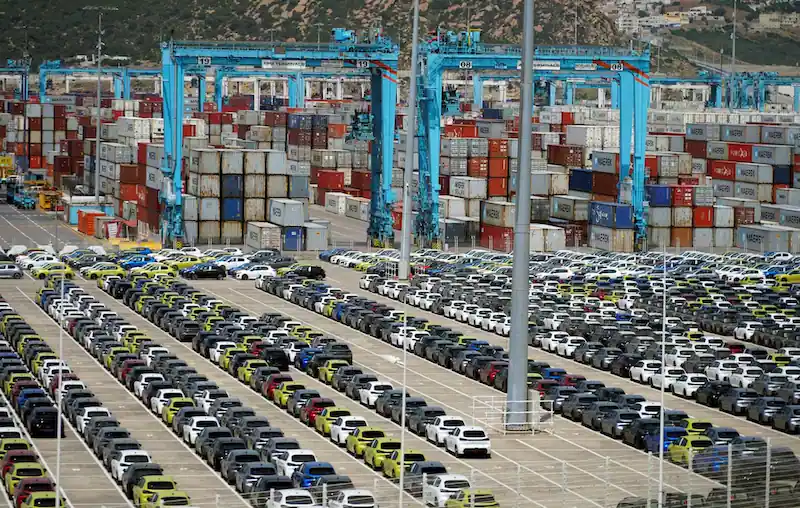


President Donald Trump is set to unveil plans for imposing tariffs on automotive imports during an upcoming press conference, further escalating the global trade tensions that have characterized his administration. The looming announcement has sparked concerns within the auto industry, with experts anticipating a significant rise in prices and disruptions to production processes.
While specific details regarding the extent of the proposed tariffs remain undisclosed, speculations suggest that they could reach levels as high as 25%. Industry insiders are bracing for a scenario in which finished vehicle imports could be subjected to a 25% tariff starting on April 2, coinciding with reciprocal tariffs on various trading partners.
To justify these tariffs, Trump is expected to revive a national security investigation into auto imports that was initiated during his first term as President. The investigation had previously recommended tariffs ranging from 25% to 35% on certain vehicles due to concerns about the impact of increasing import shares on national security.
The potential implications of these tariffs have already made an impact on the stock market, with U.S.-listed automaker shares tumbling amid fears of disruption in the global auto industry. Investors are wary of the uncertainties surrounding Trump's trade policies, especially considering the erratic nature of tariff announcements and implementations.
The Center for Automotive Research highlights that tariffs could lead to increased costs for consumers, potentially amounting to thousands of dollars per vehicle. With the U.S. heavily reliant on imported parts, the automotive industry faces challenges in maintaining production levels and pricing competitiveness in the face of such tariffs.
Forecasting models from Cox Automotive suggest that without any carve-outs for imports from Mexico and Canada, the cost of U.S.-made vehicles could see a hike of $3,000, while vehicles manufactured in Canada or Mexico may incur an additional $6,000. The disruption in production processes could result in a 30% decrease in daily vehicle production, impacting sales, pricing, and potentially leading to the elimination of certain vehicle models.
As the auto industry prepares for potential tariff repercussions, uncertainties loom over the future of international trade relationships and the broader global economic landscape. The forthcoming tariff announcement signifies a critical juncture in Trump's trade policy agenda and its ramifications on industry participants, consumers, and the overall trade environment.