


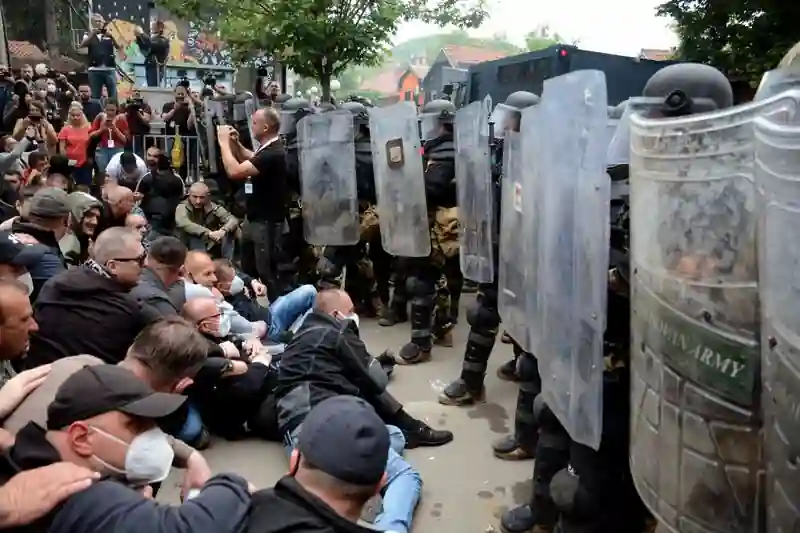


European allies have intensified their pressure on Serbia and Kosovo over the ongoing tensions in the contested north of Kosovo and have demanded new local elections be held. The worst violence in the region was seen in a decade, with dozens of NATO peacekeepers and Serb protesters being injured in the past five days.
French President Emmanuel Macron and German Chancellor Olaf Scholz called for Serbian President Aleksandar Vucic to ensure ethnic Serbs take part in the re-run and for President of Kosovo Vjosa Osmani-Sadriu to hold the contested vote again in the four municipalities. These are the first concrete requests for help that allies have made in order to put an end to the crisis, and have been scheduled to be discussed next week with both sides.
However, meeting these demands would require major concessions from both sides. For Serbia, it would mean actively encouraging Serbs in Kosovo to take part, which didn’t happen last time around, when only about 3% of voters participated. Meeting this demand would represent a major shift for Kosovo's Prime Minister Albin Kurti, who has not shown any willingness to hold another vote and has stated that the four mayors were politically appointed in a legitimate manner.
Scholz was not optimistic about resolving the current tensions, describing the issue as very serious. He said "We will see what can be achieved." Meeting these demands would require "courage from all sides" given how unpopular it would be in both countries, he added.
The unrest was sparked by Kosovo's resolve to put newly appointed mayors into their offices in the north of the country of 1.8 million. Local Serbs boycotted that vote, acting on guidance from the government in Belgrade. French President Macron said they had asked both parties to organize new elections in the four municipalities as soon as possible and for a commitment from Kosovo. He also stressed the clear participation by the Serbian side in these elections.
The ongoing dispute over the north of Kosovo dates back to the 1998-99 Kosovo war, which saw the withdrawal of Serbian forces and the deployment of peacekeepers in the region. The dispute is one of many issues that have remained unresolved since Kosovo declared independence from Serbia in 2008, which Serbia still refuses to recognize.