


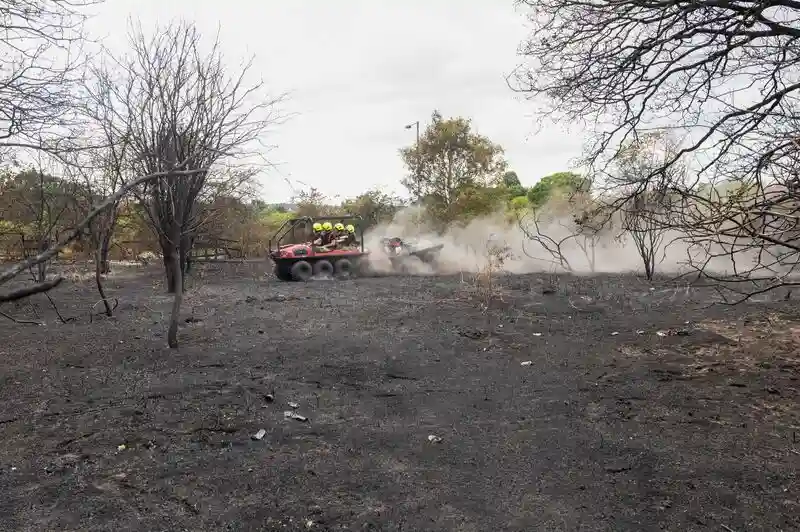


Wildfires are becoming more frequent, putting the UK at risk of scorching towns and cities. Last year saw a record number of fire incidents and dozens of people forced to flee their homes. However, experts warn that the country is not any better prepared for wildfires this year. Despite the government's own climate advisors saying that preparations are insufficient, the UK government's Home Office still relies on a four-page document from 2021 detailing its wildfire strategy.
Furthermore, the number of firefighters in the UK has decreased over the past decade, which has blunted the country's ability to respond to major fire incidents. As Europe emerges as the fastest-warming continent in an already warming planet, countries such as the UK are more vulnerable to extreme climate events, including heatwaves and wildfires. It is vital that policymakers engage with scientists to understand the fire triangle, which includes weather, fuel, and topography. There is a need to determine the scale of the risk in the current as well as in different warming scenarios.
While wildfires have been common in Britain on moorland and heathland, it is rare to see them destroy residential areas, underscoring how climate change is literally searing people’s doorsteps. Firefighters across Europe are demanding more resources, and the European Union has announced a doubling of its aerial firefighting fleet for this season to 24 airplanes and four helicopters. However, firefighters unions from 15 countries affiliated with the European Public Service Unions said that this was not enough.
The UK government must create and implement a cross-departmental strategy, according to a report from the Climate Change Committee, the UK government’s official advisor. The current framework does not specify what each department will do, when, or how, which needs to change. The British public is also not as attuned to the risks as people in fire-prone areas like California or southern Europe. For example, in Spain, there are tough restrictions on barbecues and campfires in public places in the summer months.
To prevent fires, landowners must be encouraged to develop wildfire resilience plans and avoid activities that increase risks, like escaped fires from grouse moors. Local authorities can also implement measures to reduce the risk of wildfire, such as cutting grass and installing "firebreaks" on private land. However, the country overall needs a strategy to identify high-risk areas, assess extra resources needed, and lay down how departments should share information. A national analysis of wildfires would help people understand how to protect themselves and their homes, as well as bolster evacuation plans.
To conclude, the UK needs to take wildfire risks more seriously and take proactive steps to mitigate the dangers. Steps such as investing in firefighting equipment, creating a comprehensive strategy, and educating the public on the risks and prevention measures can go a long way in reducing the risk of wildfires.