


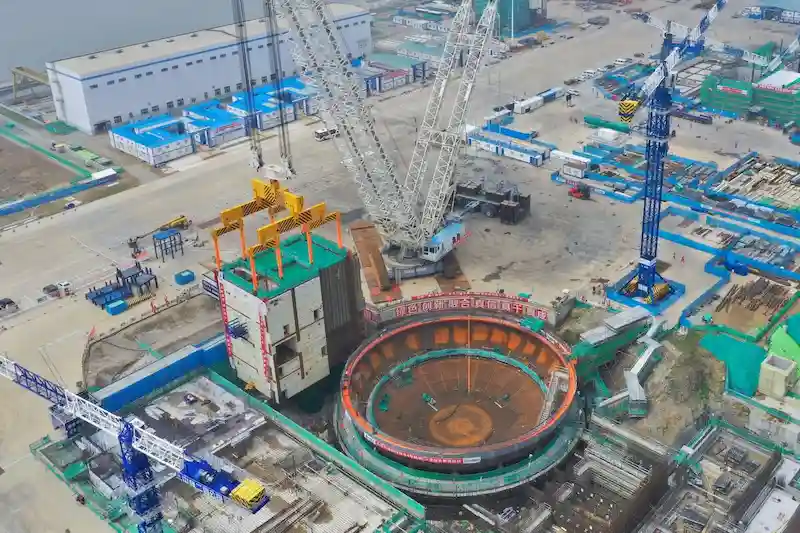


China's State Council has recently approved the construction of six new nuclear reactors, further solidifying its position as the world's leader in nuclear energy expansion. The approval came during a meeting on July 31st, with each power plant receiving the go-ahead for two units. The three approved sites include Shidaowan in Shandong, Ningde in Fujian, and Xudabao in Liaoning. The estimated total investment for these projects is a staggering 120 billion yuan ($17 billion).
China already boasts the world's third-largest nuclear fleet, trailing only France and the US. The country currently has 23 out of the 55 reactors under construction globally, as reported by the World Nuclear Association. In 2022 alone, China approved the construction of 10 new reactors. Analysts suggest that the recent approvals might not be the end of China's nuclear expansion for this year, as several other coastal power plants are awaiting the green light to start new construction.
One of the major beneficiaries of the State Council's decision is CGN Power Co., one of China's leading nuclear plant operators. Four out of the six newly approved reactors are set to utilize CGN Power Co.'s Hualong One design, demonstrating the company's dominance in the nuclear energy sector.
This decision by the State Council not only indicates China's commitment to expanding its nuclear power capacity but also has the potential to impact uranium prices. Since 2019, when China began approving new reactors after a period of safety reviews following the Fukushima nuclear disaster in Japan, uranium prices have more than doubled. The continued growth of China's nuclear fleet is expected to drive further demand for uranium, potentially driving prices higher.
China's investment in nuclear energy reflects its goal of diversifying its energy mix while reducing its reliance on fossil fuels. Nuclear power offers a relatively clean and reliable source of energy, which aligns with the country's efforts to combat climate change and achieve its carbon neutrality target. With the approval of these six new reactors, China is making significant strides towards bolstering its position as a global leader in nuclear energy production.