


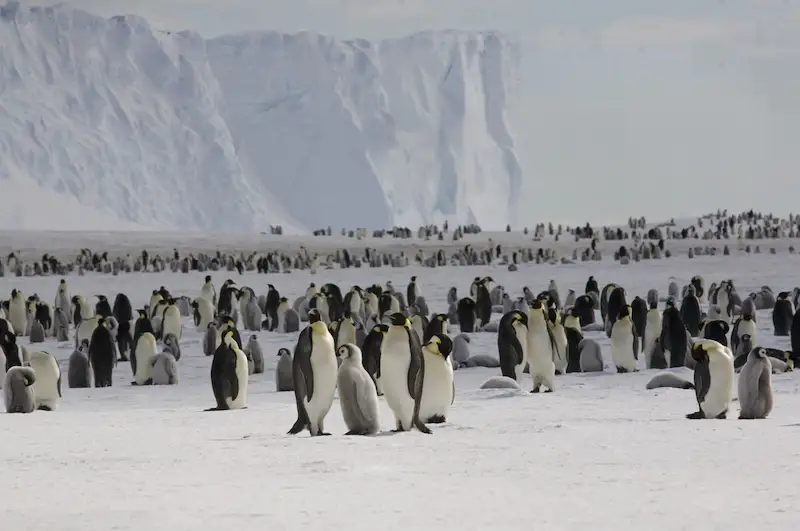


A recent study has revealed that colonies of emperor penguins in certain parts of Antarctica failed to breed at an unprecedented scale, leading to fears that this iconic species is at an increased risk of extinction. The research, conducted by scientists from the British Antarctic Survey, analyzed satellite imagery and found that none of the penguin chicks were likely to have survived. This was a result of the abandonment of four out of the five breeding sites in the region due to the retreat of sea ice, which occurred well before the chicks could develop their waterproof feathers.
The study highlighted that a total loss of sea ice occurred in some regions west of the Antarctic Peninsula in November 2022. This alarming finding indicates that the emperor penguin population faced severe challenges in finding stable breeding grounds. These penguins require firm and stable sea ice that is firmly attached to the shore to successfully breed and raise their young. Typically, breeding occurs from April to January, with eggs being laid in the Antarctic winter and chicks not fledging until December.
One of the concerning factors is that the current global warming trajectory predicts that 90% of emperor penguins will be "quasi-extinct" by the end of the century. The planet has already experienced a temperature increase of 1.2C since pre-industrial times, resulting in a significant loss of ice in Antarctica. This region has struggled to regenerate its ice levels, and the problem has been exacerbated by a recent "six sigma event," or an extreme deviation from normal ice levels not seen in 7.5 million years. Scientists warn that the Arctic could also become ice-free in summers as early as the 2030s.
While emperor penguins usually adapt by moving to more stable breeding sites as the ice retreats, this strategy becomes ineffective when the sea-ice habitat in the entire region is impacted. Additionally, the El Niño phenomenon may have worsened the situation this year, according to Caroline Holmes, a polar climate scientist at the British Antarctic Survey. However, the alarming decline in sea ice levels and warming ocean temperatures strongly indicate that human-induced global warming is exacerbating these extreme conditions.
The loss of breeding colonies and potential extinction of emperor penguins is a stark reminder of the urgent need to address climate change. These majestic creatures, iconic symbols of the Antarctic, are now facing an uncertain future due to the impact of our unsustainable practices. Immediate action is required to curb greenhouse gas emissions and protect the habitats vital for the survival of not only emperor penguins but also countless other species affected by climate change.