


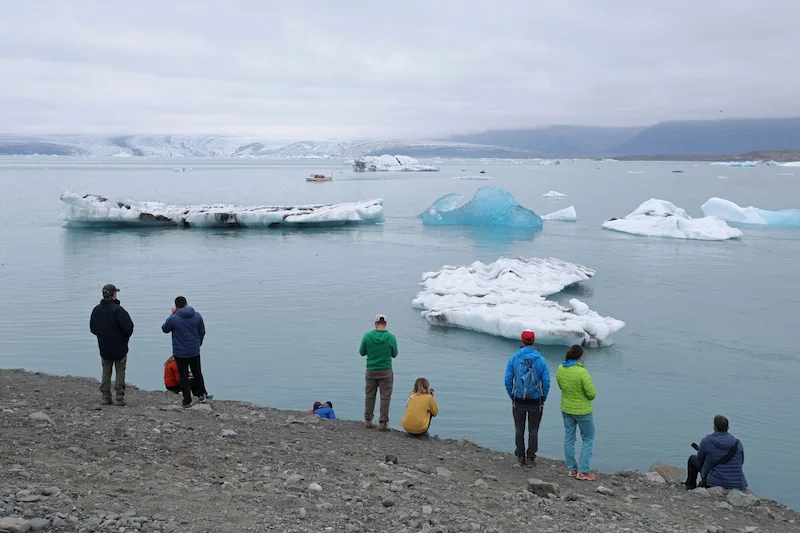


Iceland's Prime Minister, Katrin Jakobsdottir, has suggested implementing a tax increase on tourists in order to mitigate the environmental effects of the exponential growth in tourism. In an interview with Bloomberg Television, Jakobsdottir acknowledged the significant impact the tourism industry has had on Iceland's pristine wilderness. As more and more visitors flock to the country to explore its unspoiled nature, it puts a strain on the environment.
While the prime minister did not reveal the specific tax rates, she emphasized that they would not be initially high. The aim is to encourage tourists to consider the climate impact of their travels and contribute to the country's efforts to combat carbon emissions. Tourism is a vital industry in Iceland, accounting for approximately 6% of its GDP. It plays a crucial role in the nation's commitment to becoming carbon neutral by 2040.
As part of its sustainable development strategy, Iceland is encouraging companies in the tourism sector to adopt circular economy practices and reduce reliance on fossil fuels. Jakobsdottir highlighted initiatives such as transitioning to electric vehicles as part of this movement. However, she admitted that more needs to be done to address climate change. The government has already taken concrete steps in areas such as harnessing geothermal energy, subsidizing green initiatives, improving energy efficiency, and researching carbon capture.
Jakobsdottir also stressed the need for all nations to accelerate their climate action. While progress has been made, she believes that a collective effort is required to address the urgent challenges posed by climate change. By introducing measures like a tourism tax, Iceland hopes to both reduce the environmental impact of its booming industry and support the country's ambitious climate goals.