


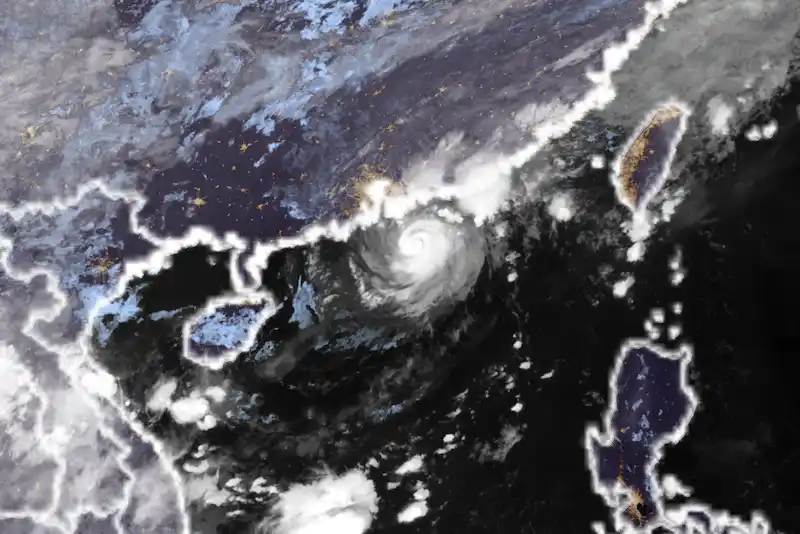


Hong Kong is bracing itself as Typhoon Koinu, with winds of up to 140 kilometers per hour (90 mph) near its center, approaches the city. The Hong Kong Observatory raised its storm alert to the second-highest level and warned that it may issue its maximum hurricane signal. The typhoon has taken a more northern track than previously forecasted and is expected to pass within 60-70 kilometers of Tsim Sha Tsui on Sunday night.
The Observatory stated that winds are expected to increase significantly as the eyewall of Typhoon Koinu approaches the vicinity of the Pearl River Estuary. Gale-force winds are already affecting many areas of Hong Kong, with occasional storm-force winds on high ground and offshore. The highest alert, known as the No. 10 signal, is defined as hurricane-force winds with sustained speeds of 118 kph and gusts exceeding 220 kph.
Last month, Hong Kong raised its No. 10 signal for the first time in five years when Typhoon Saola hit the city. The last time the maximum hurricane warning was issued twice in one year was in 1964 when Hong Kong was struck by typhoons Ruby and Dot. With the approach of Typhoon Koinu, the city is again under high alert.
In recent weeks, Hong Kong has experienced several bouts of extreme weather. The remnants of Typhoon Haikui caused record-breaking rainfall, leading to floods, landslides, and significant damage. Authorities were criticized for the lack of forewarning about the intensity of the rain. The unique topography of Hong Kong, with its hilly terrain and densely populated areas, makes it particularly vulnerable to flooding and landslides.
The impact of Typhoon Koinu could potentially lead to record insurance claims in Hong Kong, exceeding $500 million, if heavy rain causes further flood losses, warns Bloomberg Intelligence analyst Steven Lam. Climate change has intensified the summer rains in Hong Kong over time, exacerbating the risk of flooding and landslides.
Precautionary measures are being taken across the city. Many of Hong Kong's main entertainment centers, including Disneyland and Ocean Park, have closed their doors due to the storm. The Hong Kong Jockey Club canceled its horse-race meeting in Sha Tin. Additionally, 27 temporary shelters are available for those in need.
The duration of the storm signals issued by the Observatory remains uncertain. If the No. 8 signal or higher is still in place in the morning, schools and many businesses will remain closed, and stock market trading will be halted until the warning is downgraded.
Prior to reaching Hong Kong, Typhoon Koinu brushed past the southern tip of Taiwan, causing one reported fatality and over 300 injuries. Despite forecasts suggesting it would weaken, the typhoon rebuilt its eyewall and regained strength. As Hong Kong prepares for the worst, the city hopes to weather the typhoon with minimal damage and no further casualties.