


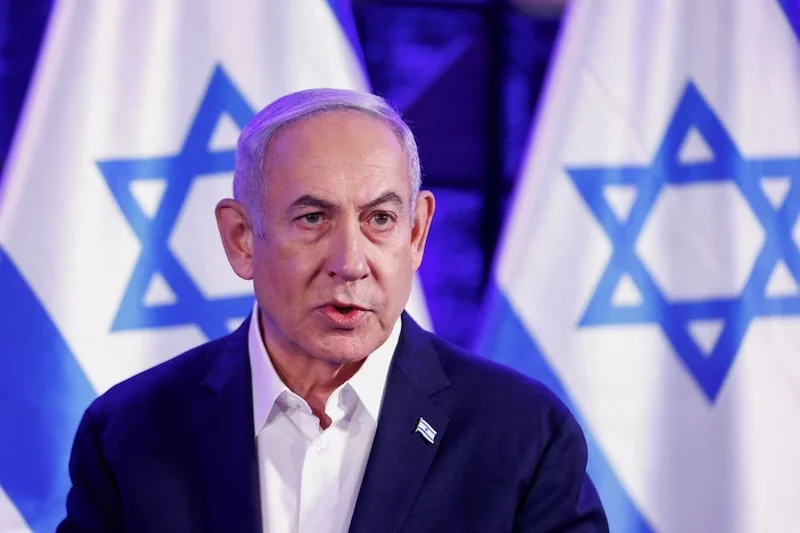


Israeli Prime Minister Benjamin Netanyahu has accused Hamas of launching the recent attack on Israel to disrupt the expansion of peace in the Middle East. He appealed to British Prime Minister Rishi Sunak to continue supporting Israel's counteroffensive in Gaza. Sunak, who visited Jerusalem to express support for Israel and facilitate negotiations for the release of hostages and humanitarian aid in Gaza, later met with Saudi Arabia's Crown Prince Mohammed bin Salman. The prince emphasized that Saudi Arabia considers targeting civilians in Gaza to be a "heinous crime." The leaders discussed the need to prevent further escalation of the conflict.
While in Israel, Sunak also met President Isaac Herzog. The British leader commended Israel for its efforts to avoid harming civilians, contrasting it with the actions of Hamas. He expressed solidarity with the Israeli people and their right to defend themselves, as well as the need to provide humanitarian access to Palestinians affected by the violence.
Regarding the explosion at a hospital in Gaza, which Palestinians attributed to Israel, Sunak's spokesperson stated that the British government is awaiting a report from the security services before forming an opinion. President Joe Biden has supported Israel's claim that the incident was caused by a misfired rocket from Palestinian fighters.
During Sunak's visit, it was reported that at least nine British nationals were killed in the attacks, while seven remain missing. The British leader met with the families of two of the missing individuals, who are believed to have been taken hostage and held in Gaza.
Sunak's trip to Saudi Arabia is part of coordinated efforts with Foreign Minister James Cleverly, who is visiting Egypt, Turkey, and Qatar. These countries are considered crucial for international efforts to uphold regional stability, secure the release of hostages, and ensure humanitarian access to Gaza.
The recent diplomatic efforts from the British government mark a departure from perceptions of declining British influence in the Middle East over the past decade. The current visit by a British prime minister to Israel and the occupied West Bank is the first since 2014. The government had previously consolidated its ministerial post dedicated to relations with the Middle East with other regions and issues.