


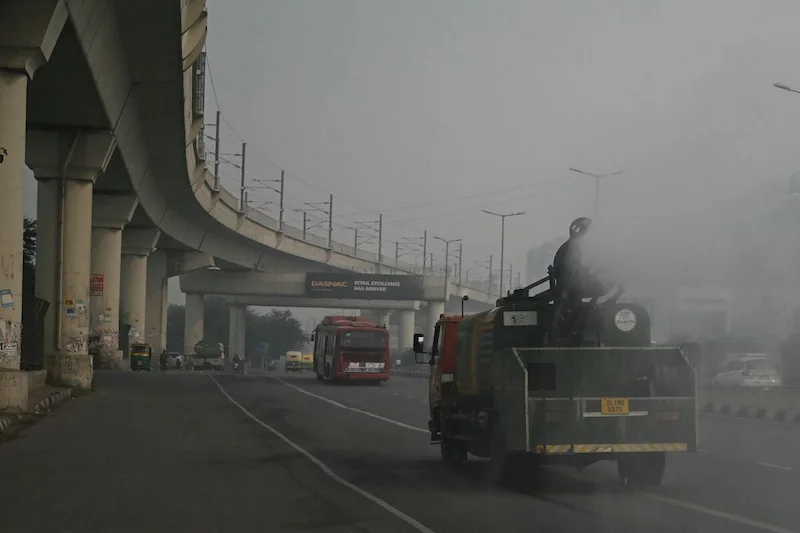


Delhi, India's capital city, is exploring the use of artificial rain as a potential solution to combat its severe air pollution crisis, which has been consistently categorized as "hazardous" in recent days. The Supreme Court has granted permission for the government to investigate the possibility of cloud seeding, a form of weather modification. With air quality reaching alarming levels, reaching as high as 609 on the air quality index, Delhi is desperate to find effective measures to improve the situation.
Cloud seeding, a technique already used in countries like China, involves the release of salts such as silver iodide into the air using drones or small planes. These salts facilitate the formation of water droplets, which eventually fall as rain. While India has previously tested this technology, it has never been implemented on a large scale. Now, scientists from the Indian Institute of Technology Kanpur are collaborating with Delhi's government to generate rain over the city in the upcoming weeks.
Sachchida Nand Tripathi, a scientist studying air quality, emphasizes that heavy rain has the capacity to effectively cleanse the atmosphere. The hope is that this approach will help alleviate the pollution crisis plaguing Delhi. A similar effort is also being considered in Mumbai, which recently experienced pollution levels on par with Delhi.
However, the success of cloud seeding is contingent on conducive weather conditions, particularly the presence of suitable clouds. While Delhi's environment minister is optimistic about favorable conditions on November 21, some experts remain doubtful. D. S. Pai, a scientist from the Indian Meteorological Department, explains that the recent brief rain shower, which temporarily improved the air quality, was unexpected. he adds that it is unlikely to last.
Delhi has implemented various measures to address the city's poor air quality, including the closure of schools, restrictions on traffic, and limitations on the use of pollution-generating firecrackers during festival seasons. The primary causes of the smog are a combination of factors such as slow winter winds and the burning of rice stubble by farmers in neighboring regions after harvests.
By exploring cloud seeding, Delhi's government aims to mitigate the hazardous effects of air pollution. The success of this initiative could provide valuable insights for other regions grappling with similar environmental challenges. However, careful monitoring and scientific evaluation will be necessary to determine the long-term viability and effectiveness of artificial rain as a solution to the city's ongoing air pollution crisis.