


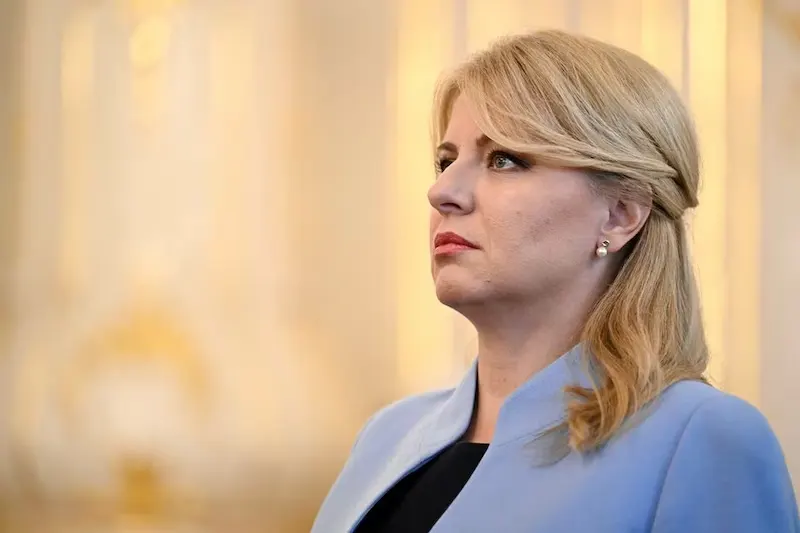


Slovakia's President, Zuzana Caputova, has stated that she is likely to veto the government's proposed fast-track changes to criminal law. The controversial changes include the disbandment of a special prosecutor's office dedicated to fighting corruption. Caputova argues that the plan requires a thorough debate as it involves unacceptable political interference, weakens protections for whistle-blowers, and risks disrupting the flow of European Union funds. The European Commission and the United States have also urged Slovakia to approach the issue with caution, highlighting the importance of preserving the rule of law.
Prime Minister Robert Fico's government, which assumed power in October, aims to pass the legislation by Christmas and dismantle the special prosecutor's office as early as January. Fico justifies the urgency of the reforms by claiming that prosecutors' actions infringe on basic rights. He intends to push through the changes in parliament by the end of the year, despite potential opposition.
Fico, who previously resigned as prime minister in 2018 following nationwide protests against corruption sparked by the murder of an investigative journalist, has accused the special prosecutor's office of being politically motivated and violating human rights. Caputova, however, believes that the move to disband the office is a deliberate attempt to remove its head, Daniel Lipsic, who served as interior minister in a previous government that opposed Fico. She condemns this as an unacceptable political intervention in the functioning of the prosecution.
The proposed changes to criminal law would result in fundamental alterations being made hastily and without sufficient expert input or public consultation, warns Caputova. The reforms could have far-reaching consequences and jeopardize the progress made in tackling corruption and organized crime in Slovakia. The special prosecutor's office has played a critical role in investigating and sentencing individuals involved in corruption cases, including police and judicial officials, as well as influential businessmen.
While Prime Minister Fico's coalition has a parliamentary majority that could potentially override Caputova's veto, the President's objection highlights the need for a thorough and impartial evaluation of the proposed reforms. The disbandment of the special prosecutor's office is not a decision to be taken lightly, as it may have serious implications for the rule of law and government accountability in Slovakia. The fate of the legislation now hangs in the balance, awaiting further deliberation and consideration of its potential ramifications.