


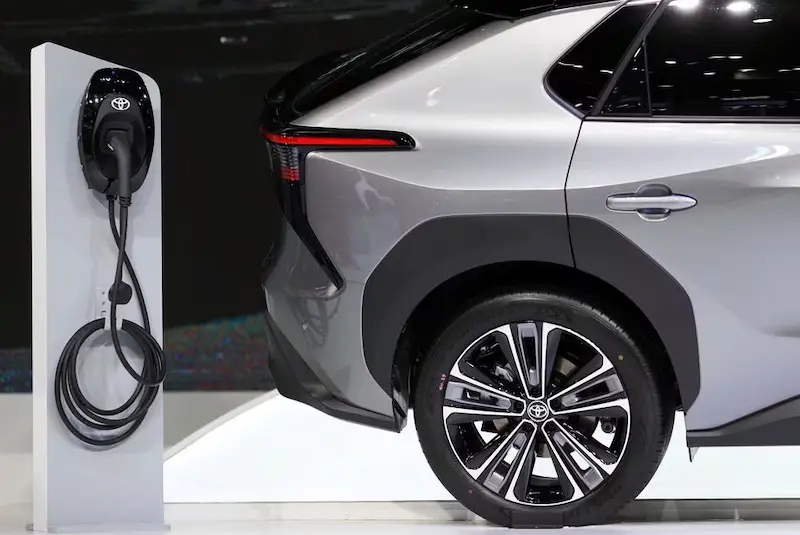


In a significant boost to Thailand's electric vehicle (EV) transition, major Japanese automobile manufacturers have announced plans to invest a staggering 150 billion baht ($4.34 billion) in the country over the next five years. According to a government spokesperson, Toyota, Honda, Isuzu, and Mitsubishi will each contribute sizeable sums to support Thailand's initiative to become a leading EV manufacturing hub.
Toyota and Honda have committed approximately 50 billion baht each, demonstrating their strong commitment to Thailand's automotive sector. Isuzu and Mitsubishi will also make significant investments, with 30 billion baht and 20 billion baht respectively. Notably, these investments will entail manufacturing electric pickup trucks, a crucial step in promoting the adoption of greener mobility solutions in the region.
This announcement follows Thai Prime Minister Srettha Thavisin's recent visit to Japan, where discussions regarding bilateral cooperation and investment took place. Thailand, Southeast Asia's second-largest economy, already holds the distinction of being the largest car producer and exporter in the region. Historically, the Thai auto sector has been dominated by Japanese manufacturers, but increasing investments by Chinese electric vehicle makers has prompted the Japanese automakers to further solidify their presence.
The investments from these Japanese giants not only reinforce their commitment to Thailand but also align with the government's goal of shifting from traditional, combustion engine vehicles to electric ones. While no official statements have been issued by Toyota, Honda, Isuzu, or Mitsubishi regarding these investments, their participation underlines their intention to support Thailand's transition to EV manufacturing.
Thailand aims to convert a significant portion of its annual vehicle production, estimated at 2.5 million units, to electric vehicles by 2030. To achieve this ambitious target, the government has been rolling out incentives and preparing thoughtful policies to attract more investments and encourage the conversion of manufacturing facilities to electric ones. These efforts range from tax cuts to subsidies for adopting EV technologies, effectively drawing the interest and support of various global automakers.
Thailand's automotive industry has already witnessed a surge in investments from Chinese carmakers, including BYD and Great Wall Motor, who have committed a substantial $1.44 billion to establish new production facilities in the country. With Japanese manufacturers now making sizable investments, it is clear that Thailand's EV ambitions are well-supported by global automotive players, and the country is quickly emerging as a key player in the electric vehicle landscape.
Overall, this influx of investment will not only drive Thailand's transition towards greener mobility but also generate job opportunities and enhance the country's economic growth. The partnerships formed between Japanese automakers and the Thai government will not only strengthen their existing ties but also solidify a sustainable future for Thailand's automotive industry.