


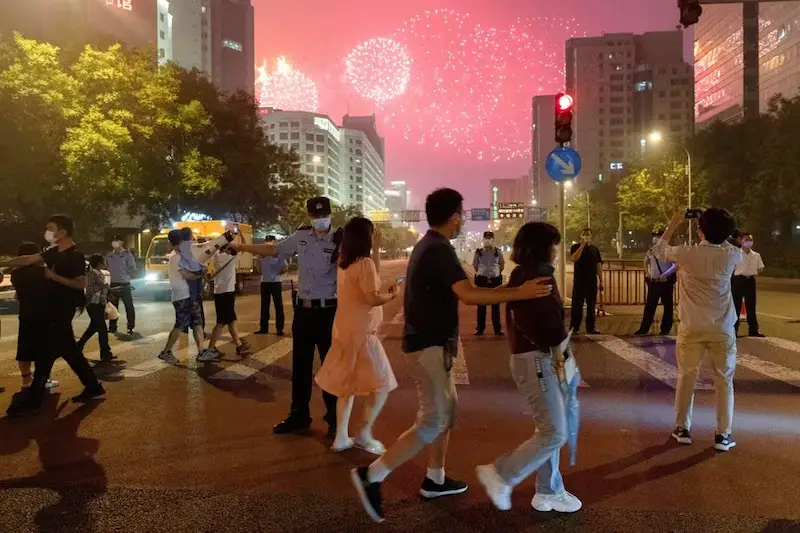


China's longstanding debate over the use of fireworks to celebrate the Lunar New Year has resurfaced once again, prompting lawmakers to address the issue. The discussion centers around whether a complete ban on fireworks, in a country widely regarded as their birthplace, is feasible. Lawmakers have acknowledged that due to air pollution prevention and fire safety regulations, there have been "differences in understanding" regarding the ban, which was never meant to be absolute.
Official data from 2017 revealed that 444 cities had already banned the use of fireworks. However, since then, some cities have relaxed their restrictions, allowing fireworks within specified venues and during certain times of the year. Despite these adjustments, several counties recently reinstated notices prohibiting fireworks, reigniting the debate.
Supporters of fireworks argue that they are an integral part of Chinese culture and should be permitted during the Spring Festival. According to folklore, fireworks were originally created 2,000 years ago to scare off the mythical beast known as "nian," which would prey on people and livestock during the Lunar New Year. Fireworks have since become deeply embedded in various celebrations throughout the country.
On the other hand, proponents of the ban emphasize the need to protect the environment and ensure public safety. They argue that regulations on fireworks are necessary due to pollution and the risk of fires. However, opinions remain divided across social media platforms such as Weibo, a popular Chinese microblog.
In a recent poll conducted by Beijing Youth Daily, over 80% of respondents expressed their support for fireworks during the Spring Festival, underscoring their cultural significance. Some public sentiment highlights the irony of the ban, particularly after the United Nations officially recognized the Spring Festival as a global holiday last week, a decision celebrated by Chinese officials.
It is worth noting that even with domestic bans, the demand for Chinese fireworks remains strong overseas. Southern Hunan province, a notable fireworks manufacturing hub, has reported significant fireworks exports totaling 4.11 billion yuan ($579 million) between January and November. This figure surpasses domestic sales, indicating a continued international fascination with Chinese fireworks.
As Chinese lawmakers address the ongoing debate surrounding fireworks, striking a balance between cultural heritage and environmental concerns poses a considerable challenge. Achieving a consensus that respects tradition while safeguarding public welfare remains a pressing issue as the Lunar New Year approaches.