


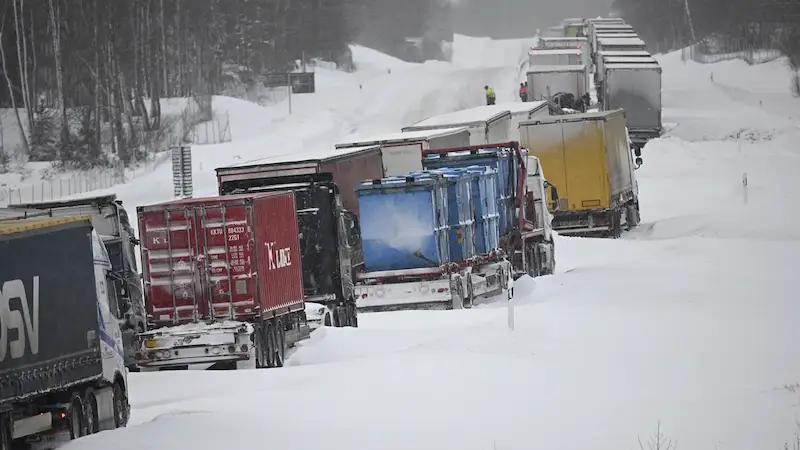


Parts of Europe are currently experiencing a tumultuous start to the new year as countries grapple with a combination of devastating floods and extreme cold. In Scandinavia, an Arctic blast has brought record-low temperatures to northern Sweden and Finland, along with heavy snowfall that has wreaked havoc on the roads. The municipality of Enontekiö in Finland recorded a bone-chilling temperature of -42.4 degrees Celsius (-44.3 degrees Fahrenheit), the lowest in 18 years. Tragically, a woman lost her life while skiing in a blizzard, and her child remains missing in the face of this unforgiving weather.
Since December, Scandinavia has been enduring biting cold, with temperatures ranging as low as 6 degrees below average in certain regions of Sweden and Finland. Norway experienced an average temperature in December that was 2.3 degrees below the norm, intensifying the freezing conditions. The persistently cold weather has even led to the Bothnian Bay, located between Sweden and Finland, freezing over earlier than usual. This marks the earliest occurrence since 2011, creating a favorable ice situation in the Baltic Sea this winter, potentially the best in many years, according to Mika Ratanen, a researcher at the Finnish Meteorological Institute.
While Scandinavia endures the icy grip of winter, other parts of Europe are facing a completely different extreme. Southern regions of Europe are grappling with deadly storms and severe flooding. Storm Henk battered the southern parts of the UK, leaving behind hundreds of flood warnings. Tragically, one individual lost their life after a tree fell on their car in Gloucestershire, southwest England. Although Henk has passed, more rainfall is expected in southern England, increasing the risk of further flooding due to the already saturated ground.
The same storm system unleashed intense flooding in northern France, resulting in hundreds of evacuations and power outages. The Pas-de-Calais department is currently under a "red alert" for flooding, with several other departments on high alert. Authorities have issued warnings, urging residents in affected areas to avoid basements, restrict travel, and stay away from waterways.
This recent bout of extreme weather in Europe is a reminder of the increasing frequency and intensity of such events, which can be attributed to climate change. The burning of fossil fuels is the primary driver of climate change, causing the Earth's atmosphere to warm. Warmer air can hold more moisture, leading to heavier rainfall and a heightened risk of destructive flooding. Last year, 2021, was recorded as the hottest on record globally, underscoring the urgent need for concerted efforts to address climate change and mitigate its impacts.
As Europe endures these divergent weather extremes, it serves as a stark reminder of the urgent need to prioritize climate action and work towards a sustainable future. The impacts of climate change are not limited to a particular region; they affect us all. It is crucial for individuals, communities, and governments to take proactive steps in reducing carbon emissions, investing in renewable energy sources, and adapting to the changing climate. Only through collective action can we mitigate the risks posed by extreme weather events and build a resilient future for ourselves and future generations.