


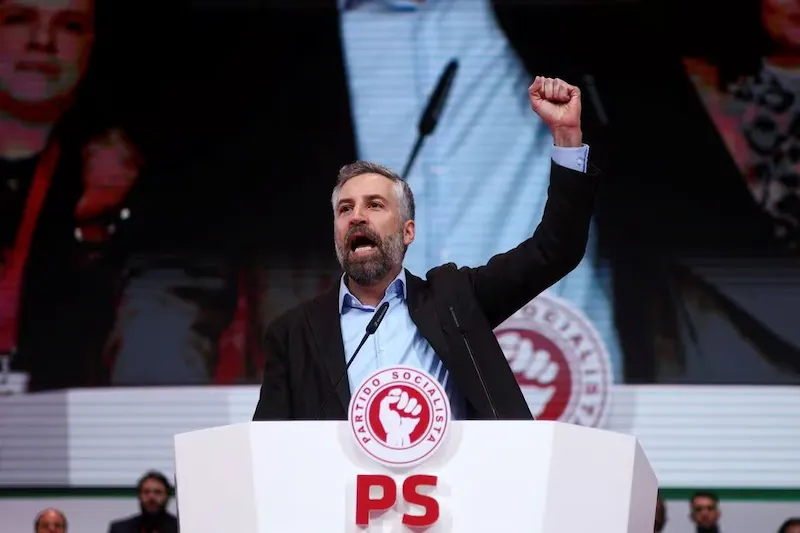


Portugal's ruling Socialist Party (PS) has unveiled its plans to increase the minimum wage and bolster economic competitiveness through targeted sector incentives if it emerged victorious in the upcoming March election. The new leader of the PS, Pedro Nuno Santos, made these promises during a party congress, outlining his vision for a more sophisticated and diversified economy that would generate higher wages and help finance an advanced social state.
Prime Minister Antonio Costa, who has been in office since 2015, recently resigned due to investigations into alleged illegalities related to government projects involving lithium, hydrogen, and data centers. President Marcelo Rebelo de Sousa subsequently called for a snap election on March 10. Opinion polls have indicated a close race between the PS and the center-right Social Democratic Party, with concerns raised about the potential rise of far-right and anti-establishment party Chega following the election.
Santos emphasized the need for Portugal to aim for the top rather than settling for being an average EU country. To achieve this, he proposed implementing more selective incentives and channeling resources into specific sectors identified by companies and universities. Santos argued that only a diversified economy, capable of producing higher value and paying better wages, would be able to transform the country's economic landscape and support social development over the long term.
Portugal's competitive standing has fallen behind countries like Denmark, Ireland, and Switzerland. Based on the IMD-Institute for Management Development's competitiveness world ranking, Portugal was ranked 39 out of 64 countries in June last year. Santos emphasized the importance of boosting the country's competitiveness in order to attract investment and create sustainable growth for the future.
In addition to economic policies, Santos also pledged to address pressing social issues. He promised to raise the minimum wage to at least €1,000 per month by 2028, a significant increase from the current €820. Acknowledging shortages of doctors and teachers, as well as difficulties in accessing housing, Santos noted that these challenges must be overcome to ensure a prosperous and fair society for all.
The Bank of Portugal recently lowered its economic growth forecast, from 1.5% to 1.2% for 2024, signaling a slowdown compared to the 2.1% expansion observed in the previous year. To counter this trend, Santos's proposed economic policies, focused on sector-specific incentives and wage increases, aim to stimulate growth, attract investment, and promote a more equitable society.
As the March election approaches, the PS's promises to increase the minimum wage and enhance competitiveness have garnered attention. The outcome of the election will not only determine Portugal's political future but also shape its economic trajectory and social welfare landscape for the years to come.