


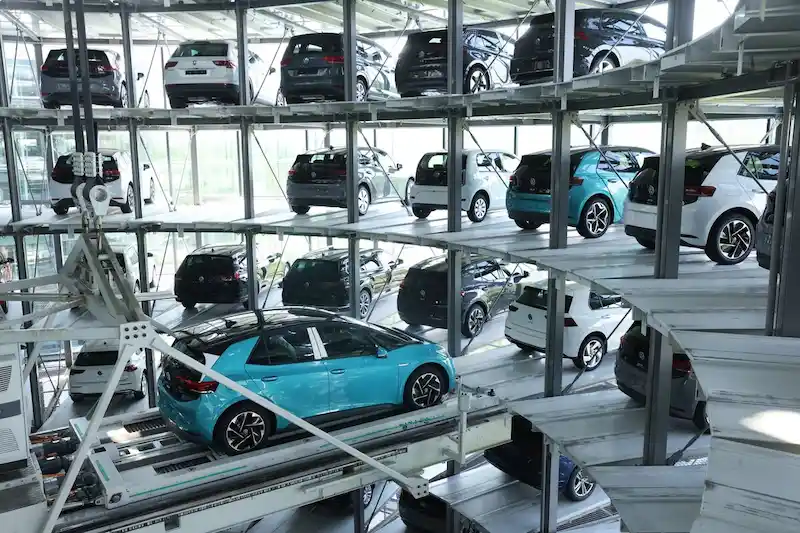


In a surprising turn of events, the electric vehicle (EV) market in Germany is projected to experience a decline for the first time in eight years. The VDA lobby, an influential automobile industry association, expects shipments of purely battery-powered cars to drop by 14% to 451,000 units this year. This decline can largely be attributed to subsidy cuts, which have put a significant dent in the demand for EVs.
Germany, as Europe's largest auto market, has been a major driving force behind the adoption of electric vehicles. However, a combination of factors such as inflation, high car prices, and inadequate charging infrastructure has curtailed the demand in recent times. The situation has worsened to the extent that several manufacturers have delayed the launch of new electric models while rental companies have scaled back their purchases for fleets.
The decisions by prominent automakers Volkswagen AG and Renault SA to withdraw plans for selling shares in their EV businesses further highlight the subdued demand and lackluster market conditions. These companies appear to be deterred by the uncertain outlook for EV sales and the challenging IPO market.
The German government's abrupt discontinuation of EV subsidies in December has only exacerbated the situation. This move came as a surprise and has effectively dealt a blow to the EV market in the country, an industry that had been steadily growing over the past few years.
It is worth noting that the last decline in EV sales in Germany occurred in 2016, and since then, the market has witnessed consistent growth. In fact, in 2023, Germany managed to sell over 524,000 fully electric cars, surpassing all other European markets. However, with this projected decline in 2024, the share of purely battery-powered cars in Germany is expected to slip from around 18% in 2023 to approximately 16%.
This setback in the German EV market serves as a reminder that the industry's growth is not linear and that various factors can influence consumer demand. Moving forward, it will be crucial for the German government, manufacturers, and other stakeholders to reevaluate their strategies to reignite interest in electric vehicles. Whether it requires revisiting subsidies or addressing infrastructure challenges, concerted efforts will be needed to revive the once-thriving EV market in Germany.