


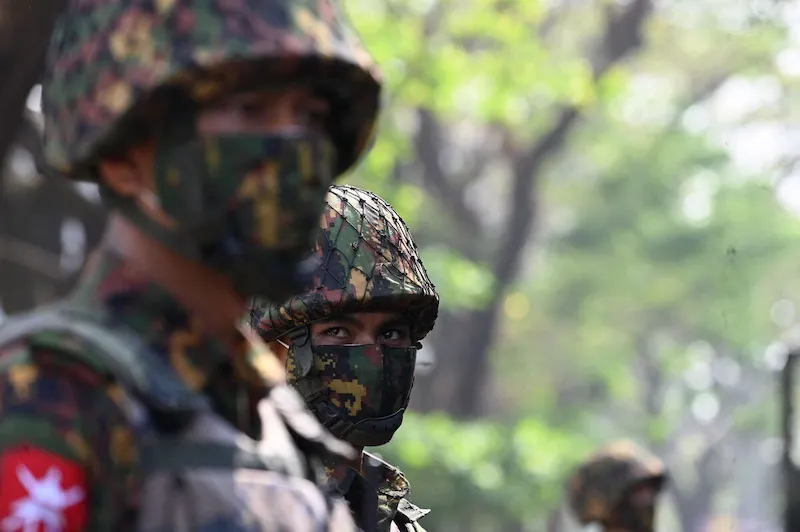


Myanmar's military government has recently implemented compulsory military service for young individuals as clashes with ethnic armies continue to escalate in various townships, particularly in Rakhine State. This decision by the military enforces the People's Military Service Law, which was introduced by the previous junta in 2010. According to the law, all men between the ages of 18-35 and women aged 18-27 are required to serve for a duration of two years under military command. Furthermore, specialists such as doctors and engineers, who are under 45 for men and under 35 for women, may be assigned to serve for three years.
In the event of a state of emergency, such as the current situation in Myanmar, the legislation allows for military service to be extended up to five years. Exceptions to the mandatory service include members of religious orders and married women. However, individuals who fail to comply with the summonses to serve may face imprisonment for a maximum of five years.
This development comes as the Myanmar military, who seized power from the Aung San Suu Kyi-led government in 2021, has lost control of numerous small towns in close proximity to China and India to ethnic armies, including the Brotherhood Alliance. Just this week, the alliance announced that their affiliated group, the Arakan Army, has successfully taken full control of the ancient Rakhine capital, Mrauk-U.
The implementation of compulsory military service seems to be a response from the military government to bolster its forces in the face of escalating tensions and territorial losses. It is likely aimed at increasing the number of troops available to combat the ethnic armies and regain control of key areas. However, this move has raised concerns among the population, particularly the young citizens who will be obliged to serve. The mandatory conscription not only disrupts their personal plans and aspirations, but it also raises questions about the military's ability to address the complex underlying issues that have led to these clashes with ethnic armies.
The situation in Myanmar remains highly volatile, with the military government facing widespread resistance and protests from the civilian population, including pro-democracy activists and ethnic minority groups. The implementation of compulsory military service is likely to exacerbate the already heightened tensions and further deepen the divide between the military and the people. The international community, including regional powers and human rights organizations, will undoubtedly scrutinize this development closely, raising concerns about the human rights implications and the impact it will have on Myanmar's path towards a peaceful and inclusive future.