


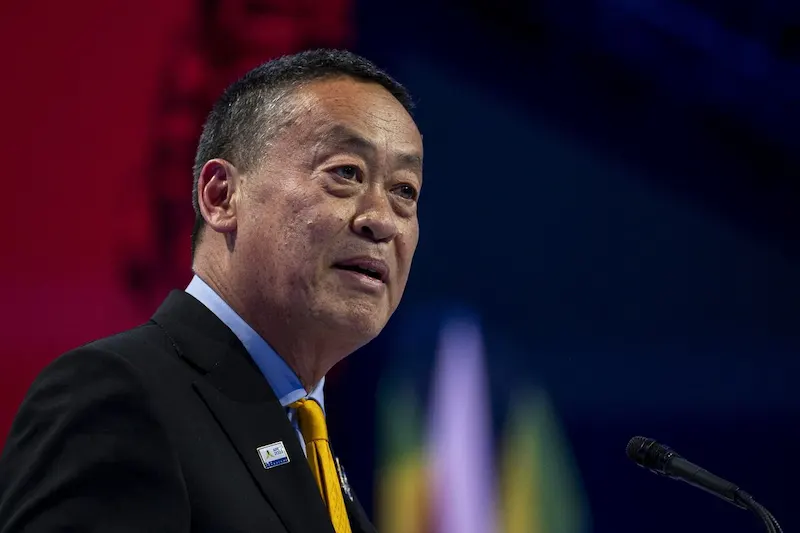


The Move Forward Party, Thailand's main opposition group, has expressed concerns over the public sparring between Prime Minister Srettha Thavisin and the central bank chief regarding monetary policy. The ongoing clash, fueled by Srettha's persistent calls for a cut in interest rates and the central bank's reluctance to do so, has raised questions about the institution's independence and its potential impact on the country's credit ratings.
Deputy leader of the Move Forward Party, Sirikanya Tansakun, has urged the Prime Minister and the central bank governor to engage in constructive dialogue to formulate a coordinated fiscal and monetary policy response aimed at revitalizing the economy. She emphasized the importance of ceasing communication through the media and instead working together to find effective solutions.
Srettha's insistence on lower interest rates, despite the central bank's stance that there is no urgent need for a rate cut, has led to a prolonged confrontation that has unsettled investors and contributed to the Thai baht becoming the weakest-performing currency in the region. Sirikanya cautioned that the public nature of this dispute could undermine confidence among global investors and tarnish Thailand's reputation.
While acknowledging the need to address economic challenges, Sirikanya pointed out that simply cutting interest rates may not be the most effective short-term solution. She highlighted the time lag in rate transmission and suggested that sustained low inflation could provide a stronger case for easing monetary policy in the future.
The Move Forward Party staunchly advocates for the independence of the Bank of Thailand, emphasizing the importance of preserving the institution's autonomy. Drawing parallels to Turkey, where political interference in monetary policy led to capital flight and currency depreciation, Sirikanya warned against replicating such a scenario in Thailand.
Sirikanya also raised concerns about the potential impact on Thailand's sovereign rating outlook if the differences between the government and the central bank are not resolved promptly. Citing the example of Hungary, where clashes between authorities and the central bank resulted in a downgrade in the country's rating outlook, she emphasized the need for dialogue and cooperation to avert similar consequences in Thailand.
In conclusion, Sirikanya underscored the importance of addressing the current discord between the government and the central bank to prevent further economic instability. She highlighted the risks posed by slow growth, deteriorating fiscal conditions, and threats to the central bank's independence, urging for a collaborative approach to safeguard Thailand's economic well-being.