


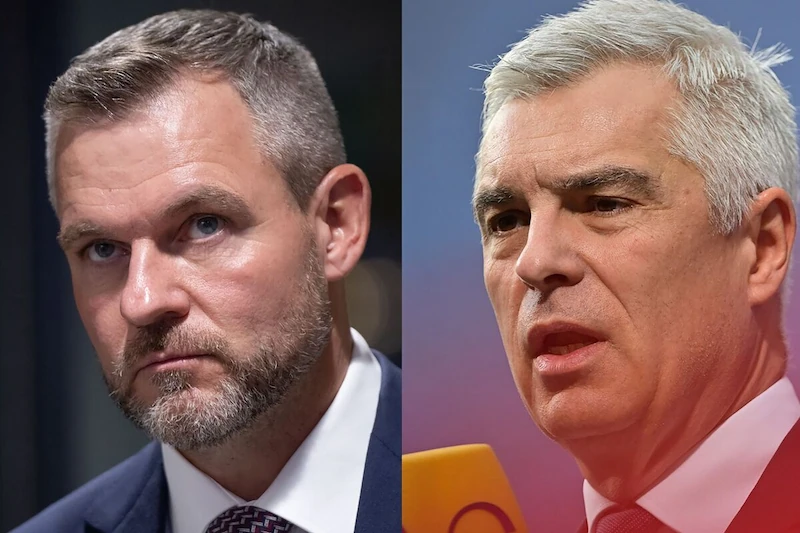


In a surprising turn of events, former Slovakian Foreign Minister Ivan Korcok has emerged victorious in the first round of the nation's presidential election, defying initial polling expectations. Korcok, who stands in opposition to Prime Minister Robert Fico's increasingly anti-Western stance, secured 42.5% of the votes, positioning himself as a formidable contender for the presidency. His platform centers on maintaining Slovakia's alignment with the European mainstream, in stark contrast to Fico's Russia-friendly policies.
Korcok's unexpected lead sets the stage for a runoff on April 6, where he will face off against Peter Pellegrini, a key ally of Fico and the current parliamentary speaker. Pellegrini, who garnered 37% of the vote in the first round, has expressed his determination to secure support from nationalist voters in the upcoming runoff. Emphasizing his opposition to a "liberal, right-wing, progressive" presidency, Pellegrini aims to consolidate Fico's political dominance over Slovakia.
The outcome of the final round will impact the balance of power in Slovakia, with implications for the nation's relationship with the European Union. A victory for Pellegrini would likely signal a deepening of Fico's agenda, characterized by contentious reforms to the justice system and attacks on the media. Fico, a vocal critic of Western military involvement in neighboring Ukraine, has drawn criticism from the EU for his pro-Russia stance and efforts to curtail independent investigations.
In contrast, Ivan Korcok has positioned himself as a continuation of the pro-EU trajectory set by incumbent President Zuzana Caputova, who opted not to seek reelection after facing relentless opposition from Fico's camp. If elected, Korcok would wield significant influence in his role as head of state, wielding the power to veto legislation and appoint key government officials—a potential check on Fico's authority.
As Slovakia prepares for a pivotal presidential runoff, the choice between Korcok and Pellegrini represents a critical juncture for the nation's future trajectory. While Fico's coalition seeks to maintain its grip on power, Korcok's platform offers a path towards greater alignment with European values and principles. The outcome of the election will not only shape Slovakia's domestic policies but also its place on the international stage, signaling either a continuation of the current pro-EU course or a shift towards a more Russia-leaning stance under Fico's leadership.