


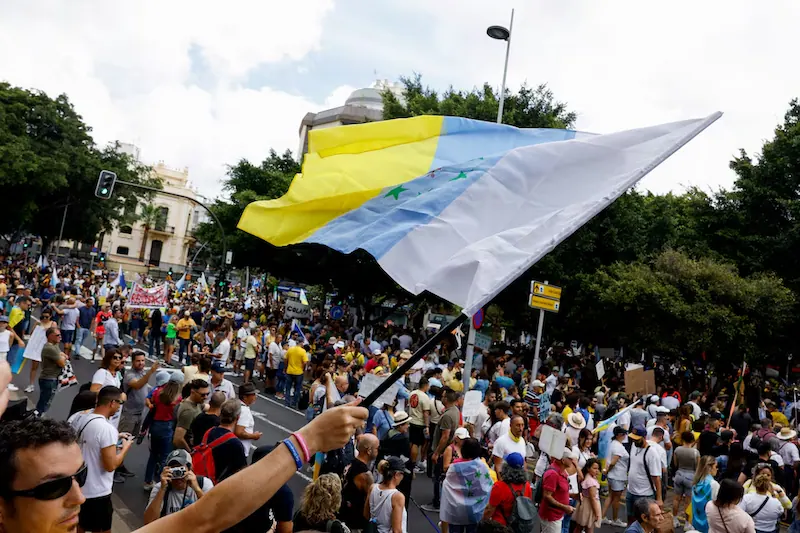


In response to the surging influx of tourists and the consequential rise in short-term holiday rentals and construction of hotels in Tenerife, a passionate demonstration unfolded on the Spanish island this weekend. Thousands of individuals gathered, advocating for temporary restrictions on tourist arrivals to address the escalating housing costs that are adversely affecting the local population. Through gripping placards carrying messages such as "People live here" and "We don't want to see our island die," protesters conveyed the urgent need for reform within the tourism sector, which currently contributes to 35% of the region's GDP in the Canary Islands.
Participants of the protest, held in Tenerife's capital, Santa Cruz de Tenerife, clarified that their stance is not aimed at tourists themselves but rather at the prevailing tourism model that fails to serve the best interests of the land and its inhabitants. Speaking to Reuters, one of the demonstrators emphasized the necessity for changes to be implemented to ensure sustainability and well-being for local communities amidst the tourism boom.
The call for action resonated beyond Tenerife, as smaller marches emerged across the Canary Islands and various Spanish cities. Organized by approximately two dozen environmental groups, these demonstrations were strategically scheduled ahead of the peak summer season to raise awareness about the pressing issues linked to uncontrolled tourism growth. The overarching demand from these organizations is for local authorities to impose temporary restrictions on visitor numbers, thereby alleviating strain on the islands' environment, infrastructure, and housing resources. Moreover, they advocate for regulations on property acquisitions by foreigners to safeguard the housing market for residents.
Antonio Bullon, one of the leaders of the protest, underscored the urgency for authorities to intervene in the current tourism model, describing it as both corrupt and destructive. Highlighting the finite resources of the Canary Islands and the escalating economic vulnerabilities stemming from unrestrained growth, Bullon emphasized the need for decisive action to protect the region's sustainability and the livelihoods of its people.
Amidst the escalating debate, governmental figures in the Canary Islands have acknowledged the need for regulatory changes. In a statement preceding the protest, Canary Islands president Fernando Clavijo expressed pride in the region's status as a prominent tourist destination in Spain. However, he also conceded the necessity for increased controls as the tourism sector continues to expand. Clavijo's acknowledgment of the pressing issues at hand, including housing affordability and environmental impact, signals a readiness to address the concerns raised by the protesters and environmental organizations striving for a more balanced and sustainable tourism model in the Canary Islands.