


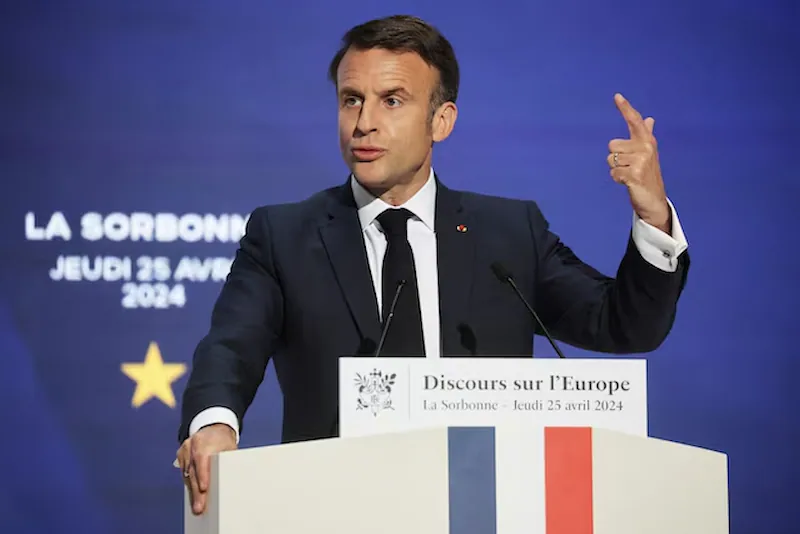


French President Emmanuel Macron has reignited the debate surrounding Europe's defence strategy by advocating for the inclusion of France's nuclear weapons in the discussion. In a recent interview with regional newspapers organized by EBRA, Macron emphasized the necessity for a "credible European defence" that transcends the protection provided by NATO. He proposed the consideration of deploying anti-missile shields to intercept all missiles and deter the use of nuclear weapons, indicating a shift towards a more comprehensive and integrated approach to European defence.
Traditionally, France has maintained a doctrine of using nuclear weapons only when its vital interests are directly threatened. However, Macron expressed openness to exploring a more "European dimension" to these interests, signaling a willingness to engage in dialogue about the strategic implications of sharing or aligning nuclear capabilities within the European context. This suggestion underscores Macron's broader vision for a stronger and more cohesive European defence architecture, particularly in light of geopolitical uncertainties and evolving global security challenges.
Despite Macron's intentions to stimulate a constructive conversation on European defence, his proposal has prompted criticism from political opponents across the ideological spectrum. Far-right European lawmaker Thierry Mariani labeled Macron as a "national danger," cautioning against the perceived risks of his defense policies. Within Macron's own political landscape, European lawmaker Francois-Xavier Bellamy, representing the right-wing LR party, raised concerns about the implications for French sovereignty, echoing sentiments of maintaining national autonomy in defense matters.
On the opposite end of the political spectrum, far-left French lawmaker Bastien Lachaud raised objections to the notion of sharing the nuclear deterrent, arguing that it could compromise France's strategic independence. The opposition to Macron's stance reflects the deep-seated sensitivities and diverging views within French politics regarding the country's military capabilities and its role within the broader European security framework. The forthcoming EU parliamentary elections in June are likely to serve as a critical juncture for assessing public sentiment towards Macron's proposals and the direction of European defence policy.