


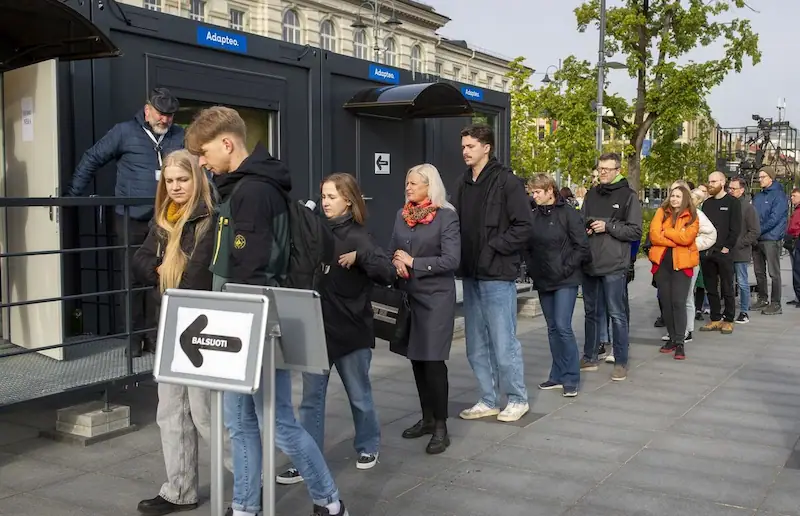


In the shadow of escalating tensions with Russia and amidst fears of Moscow's intentions in the strategically vital Baltic region, Lithuanians headed to the polls on Sunday to cast their votes in a presidential election. The incumbent, Gitanas Nausėda, was the frontrunner for another term in office, with eight candidates challenging him in the race. However, with no candidate expected to secure the required 50% of votes, a potential runoff on May 26 looms on the horizon, adding an extra layer of suspense to the election.
As an important NATO ally on the alliance's eastern flank, Lithuania plays a crucial role in the current geopolitical landscape, especially as tensions soar following Russia's military advances in Ukraine. The recent gains made by Russian troops in northeastern Ukraine have raised concerns not only in Lithuania but also in neighboring Latvia and Estonia. The Baltic states, having declared independence post the Soviet Union's dissolution, have firmly aligned themselves with the West by joining the EU and NATO, underscoring the significance of the presidential position in safeguarding national security and foreign policy interests.
At 60, Gitanas Nausėda is a moderate conservative seeking a second term as president, with his main challenger being the 49-year-old current Prime Minister, Ingrida Šimonytė. Their rivalry comes against the backdrop of the incumbent's decisive victory over Šimonytė in the 2019 runoff, underscoring the competitive dynamics of this election. Another noteworthy contender is Ignas Vėgėlė, a populist lawyer who rose to prominence during the COVID-19 pandemic for his anti-restriction and anti-vaccine stance, appealing to a segment of the electorate grappling with pandemic-related issues.
Beyond the presidential race, Lithuanians were also presented with a referendum on dual citizenship, a topic with deep implications for the nation's identity and diaspora community. The current law necessitates that Lithuanians adopting another nationality must renounce their Lithuanian citizenship, a policy that has contributed to a decline in the country's population over the years. The referendum's outcome could hold significant ramifications for the future of Lithuania's diaspora ties and demographic composition.
In a departure from the norm, the Organization for Security and Cooperation in Europe (OSCE) declined Lithuania's invitation to observe the election due to restrictions on Russian and Belarusian monitors. The move underscored the heightened tensions between Lithuania and these nations, with accusations of threats to political and electoral processes. However, the OSCE's decision to reject the invitation marked a deviation from established norms, highlighting the complexities of international observers in the current geopolitical context.