


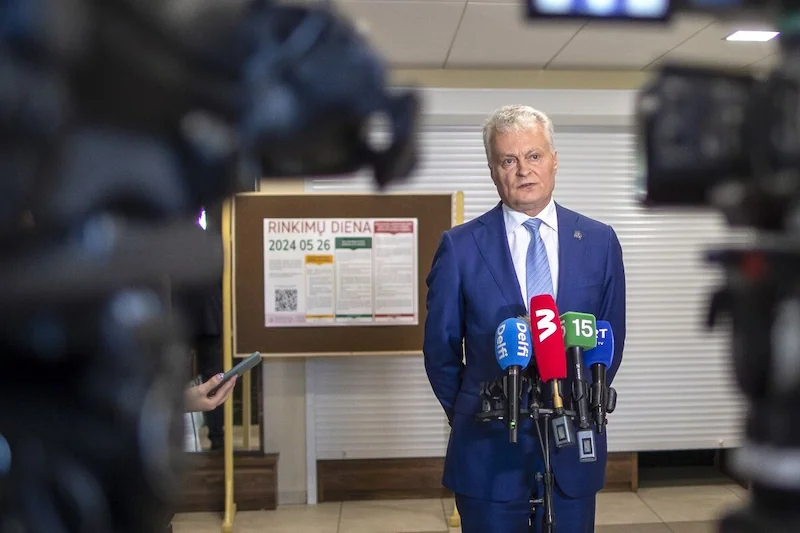


The Baltic state of Lithuania on Sunday re-elected its standing President Gitanas Nauseda, indicating the nation's desire for consistent foreign policy and a firm stance against potential Russian hostility. Nauseda successfully secured 74% of the vote in a runoff against political adversary and current Prime Minister Ingrida Simonyte, according to the electoral commission's data.
The fear of Russian aggression has spurred the presidential election debate in the 2.8 million population nation that shares borders with Belarus and the Russian exclave Kaliningrad. Both Nauseda and Simonyte displayed their support for Ukraine and stressed the need for NATO allies to strengthen the defense at their shared eastern boundary.
Speaking on Sunday, Nauseda emphasized that Lithuanian independence and liberty are steeped in fragility and need to be treasured and safeguarded. He further said that collective security demands increased focus. Over three decades after regaining independence from its Soviet Union repression, Lithuania, an EU member country, has recently organized its largest-ever military drills, involving curfews in its two main cities.
As part of both the EU and NATO, Nauseda has been vocal about challenging Moscow's moves. He recently identified a Russian draft plan, aimed at realigning its maritime borders, a “hybrid attack against the West" with a purpose of testing NATO's consolidation. The draft proposed unspecified changes to Russia's maritime borders with Lithuania and Finland in the Baltic Sea but was later withdrawn from a governmental site without an official statement.
In his first press briefing after re-election for another five-year term, President Nauseda stated Lithuania is ready to deploy professional soldiers for training exercises in Ukraine, if asked by the Ukrainian government. However, he also stated that Kyiv has currently prioritized support from the West in the form of weapon and ammunition supplies.
The president promised continued support for Ukraine, adding that he will lobby for the global community's attention for Ukraine. Nauseda recognized the complexity of the situation given the emergence of new conflicts worldwide.
In relation to the Taiwanese trade office that caused a diplomatic friction with China, Nauseda stated that changing the office's name in Vilnius to appease Beijing is unlikely to drastically change their relationship and is “not a priority”. He further critiqued China for not treating Lithuania as an equal partner.
Nauseda, a 60-year-old former chief economist at SEB Bank in Vilnius, entered the election as a favorite candidate. After his success in the first round in May, he received endorsements from the eliminated candidates. The Lithuanian president satisfies roles in foreign and defense policy, with limited power over domestic issues but retains the power to veto laws, assign judges, and other officials. The president also serves as the ambassador for the country at EU and NATO meetings.
His opponent, Simonyte, and he had a mutual agreement on security and foreign policy but differed on domestic issues. Nauseda typically garnered the support of traditional family value voters while Simonyte championed a more inclusive approach to issues like LGBTQ rights. Nauseda took vows in terms of family policy and providing tax perks and housing access. He will have to align these policies with the next government's plans following the parliamentary election in Lithuania on October 13.