


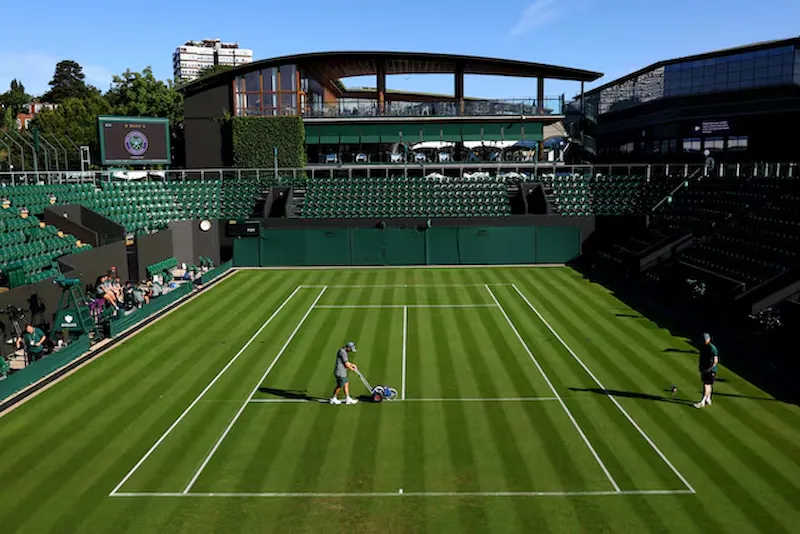


In a monumental decision, the Greater London Authority granted permission for the All England Lawn Tennis Club to proceed with an extensive expansion project, marking the culmination of a contentious battle over the radical plans. The proposed development includes the construction of 39 new grass courts, featuring a state-of-the-art 8,000-seat show court, on adjacent land encompassing a golf course and Wimbledon park.
At a public hearing held at City Hall, Jules Pipe, Deputy Mayor for Planning, Regeneration, and the Fire Service, lauded the transformative initiative, emphasizing its pivotal role in upholding Wimbledon's status as the premier tennis tournament globally and its substantial contributions to the local community. Despite opposition from local residents' groups, environmental advocates, and some lawmakers, the GLA's approval of the project elicited cries of disapproval from the crowd in attendance.
Debbie Jevans, Chair of the All England Club, expressed elation at the decision, asserting that the approved plans would yield 27 acres of new parkland for public enjoyment and bring the Qualifying Competition for The Championships onsite, thereby unlocking significant economic and employment opportunities. While critics raised concerns about the project's potential environmental impact and the creation of an extensive "tennis industrial complex," Jevans reassured that meticulous planning and environmental considerations would be paramount throughout the project's execution.
Central to the proposal is the relocation of the qualifying tournament to the Wimbledon site, a move projected to enhance the experience for players and fans, with attendance capacity potentially soaring to 10,000 spectators per day. The All England Club outlined measures to mitigate environmental repercussions, including enhancements to the Wimbledon Park lake and the plantation of 1,500 trees. Notably, seven new Championship-grade grass tennis courts would be open for community use, underscoring a commitment to broader accessibility and engagement.
With Deputy Prime Minister Angela Rayner giving her approval for the GLA's decision, the path seems clear for the ambitious development to progress unhindered. Jules Pipe highlighted the manifold advantages the project offers, projecting a significant annual contribution of 336 million pounds to the UK economy, along with the creation of 40 new jobs year-round and over 250 additional positions during the Championships.
While the London Borough of Merton had previously endorsed the plans, a setback arose when the planning committee of neighboring Wandsworth initially rejected the proposal, prompting referral to the Greater London Authority. The involvement of various stakeholders, including the Mayor of London, underscores the complexity and significance of this development, poised to elevate Wimbledon's stature on the global sporting stage and invigorate the local and national economy.