


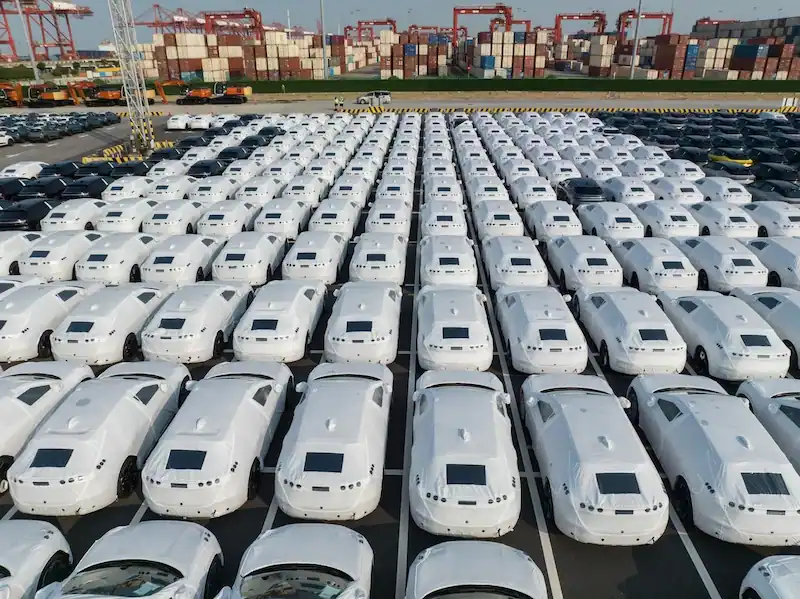


Amid looming additional tariffs set to take effect at the end of this month in the European Union, Chinese electric vehicle (EV) exports to the EU have surged to over 60,000 vehicles in September, marking the second-highest level on record. According to customs data, firms from China shipped a total of 60,517 EVs to the 27 nations in the European trade bloc, reflecting a substantial 61% increase compared to the same period last year.
The European Commission's announcement of launching an anti-subsidy investigation into China-made EVs in October 2023 prompted a peak in shipments, recorded at 67,455 vehicles. In response to this, the EU introduced provisional duties in June that necessitated targeted companies to set aside guarantees; however, it was confirmed in August that these duties would not be collected retroactively. Nonetheless, member states voted on October 4th to implement new tariffs of up to 35%, with 10 countries including France, Italy, and Poland in favor of the measure. Despite ongoing negotiations between China and the EU for an alternative solution, the tariffs are set to be enforced by the end of October.
The surge in shipments from Chinese EV makers signifies a strategic effort to circumvent the impending tariffs, showcasing their proactive approach to market challenges. Moreover, the tariffs are anticipated to moderately impede, but not thwart, the ambitions of Chinese automakers aiming to expand in the lucrative European market. With the potential for Chinese cars to command higher prices abroad compared to domestic markets, there is a promise of increased profitability for automakers amidst the tariff uncertainties.
Looking ahead, companies like BYD Co. are already making strategic moves to establish production facilities in Hungary and Turkey, while other manufacturers such as Xpeng Inc. and Zeekr from Zhejiang Geely Holding Group Co. are exploring options to localize production. These initiatives underscore the industry's resilience and determination to adapt to evolving trade dynamics, ensuring sustained growth and competitiveness in the global EV market.