


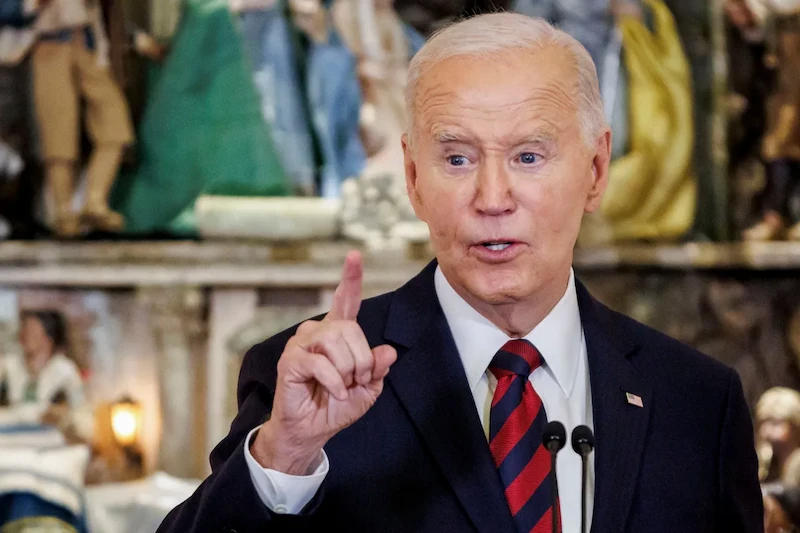


In a historic move, President Joe Biden has granted clemency to almost 1,500 individuals, marking the largest one-day act of presidential mercy. Among those granted commutations are individuals who were placed on home confinement during the Covid-19 pandemic as part of efforts to reduce prison populations.
Expressing his belief in second chances and the power of rehabilitation, President Biden stated, “America was built on the promise of possibility and second chances.” By extending mercy to those who have shown remorse and reform, he aims to restore opportunities for individuals to reintegrate into society and make positive contributions to their communities. Additionally, the president looks to address sentencing disparities for non-violent offenders, particularly those convicted of drug-related offenses.
Alongside the commutations, President Biden issued pardons to 39 individuals convicted of non-violent crimes, some of whom would receive lighter sentences if convicted under current laws. The White House did not disclose the names of those pardoned and indicated that more pardons are expected in the final weeks of the president’s term.
This latest act of clemency adds to a series of pardons and commutations granted by President Biden in recent years. Notably, he previously pardoned individuals convicted of federal simple marijuana possession offenses and expanded relief to include those involved in the use or sale of marijuana. Furthermore, the president offered pardons to former military servicemembers convicted of offenses related to their sexual orientation.
The decision to grant clemency has not been without controversy, especially following the recent pardon of Hunter Biden, the president’s son, who was convicted of federal gun charges and pleaded guilty in a separate felony tax case. Critics from both sides of the political spectrum voiced concerns over the perceived political motivations behind the pardon.
While President Biden’s use of clemency has been more sparing compared to past presidents, the backlog of cases at the Office of the Pardon Attorney highlights the ongoing demand for relief among federal convicts. The president holds the constitutional power to grant pardons and commutations for offenses against the United States, aiming to restore civil rights and shorten sentences for individuals convicted of federal crimes. Nonetheless, the limitations of this power exclude those facing state crimes, including more than 2,000 prisoners on death row awaiting execution.