


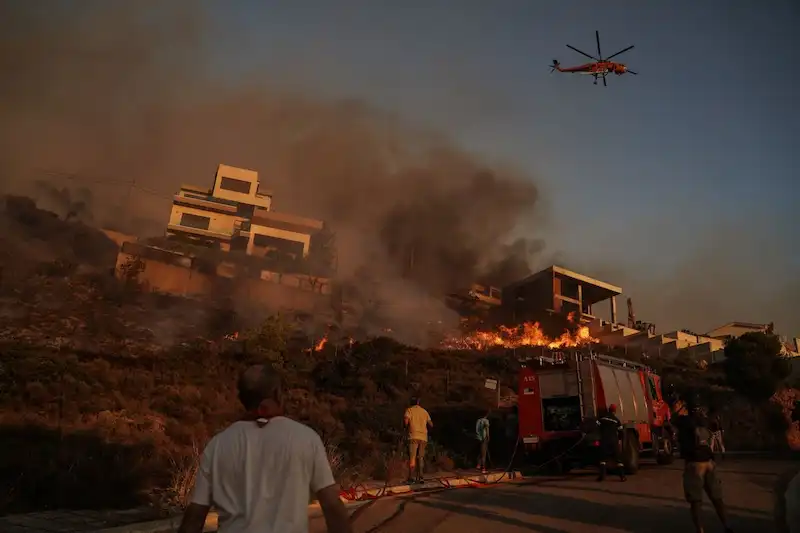


Europe is currently battling a wave of wildfires as extreme heat sweeps across the continent. From Greece to Switzerland, these fires have wreaked havoc, destroying homes and forcing evacuations. Spain's Catalonia region even recorded its highest-ever temperature, reaching a scorching 45°C (113°F). This alarming escalation of wildfires has prompted the European Union to dispatch four firefighting planes from France and Italy to assist Greece, where fires near Athens are still burning.
Meanwhile, in Spain's Canary Islands, over 4,000 people were forced to flee their homes due to a raging fire. Although some residents have been able to return, the threat of further outbreaks remains a concern. In Switzerland's Valais canton, villages have been evacuated as a precaution against a growing forest fire in the Swiss Alps.
The severity of the heatwave across southern Europe mirrors a broader trend seen across the Northern Hemisphere. As global warming intensifies, extreme weather events are becoming more frequent and intense, occurring from the United States to China. The World Meteorological Organization (WMO) warns that this could become the "new normal," underscoring the urgency of reducing greenhouse gas emissions to mitigate further climate change impacts.
The situation in Greece remains critical, with a fire outside Athens still burning and another blaze in Dervenoxoria moving closer to the city. Strong winds have made firefighting efforts even more challenging, necessitating evacuations and threatening homes and businesses. Although some fires in southeastern areas have been contained, firefighters continue to battle the flames with the aid of jets and helicopters.
The health risks posed by this prolonged heatwave are significant. The International Federation of Red Cross and Red Crescent Societies has issued a warning about the increasing frequency and intensity of heatwaves, which have resulted in the deaths of 400,000 individuals in the past decade due to extreme climate and weather-related disasters. Vulnerable groups, such as infants, the elderly, and those with chronic health conditions, are particularly at risk.
Italy's ministry of health has declared emergency heatwave conditions in 20 major cities, including Rome and Florence. The country's civil protection agency has established "heat help points" in Rome, offering water and assistance to combat the scorching temperatures. The heatwave has disrupted power and transportation systems, with power consumption expected to peak in Italy on Tuesday.
France's nuclear fleet operations may also be affected as rivers warm, making it unsafe to use water for cooling reactors without endangering wildlife. The heatwave alert has been extended in seven regions of southeastern France, causing additional concerns.
Furthermore, the impact of the heatwave extends beyond land, as sea temperatures around the Iberian Peninsula are approximately 2°C higher than average, with parts of the Mediterranean reaching 28°C. In contrast, northern Europe is experiencing cooler weather, with temperatures below seasonal averages in the UK and Nordic countries.
As Europe grapples with the devastating consequences of these wildfires and the broader impacts of climate change, urgent action is needed to mitigate further damage. Reducing greenhouse gas emissions and implementing measures to adapt to a changing climate are crucial steps in combating the "new normal" of extreme weather events.