


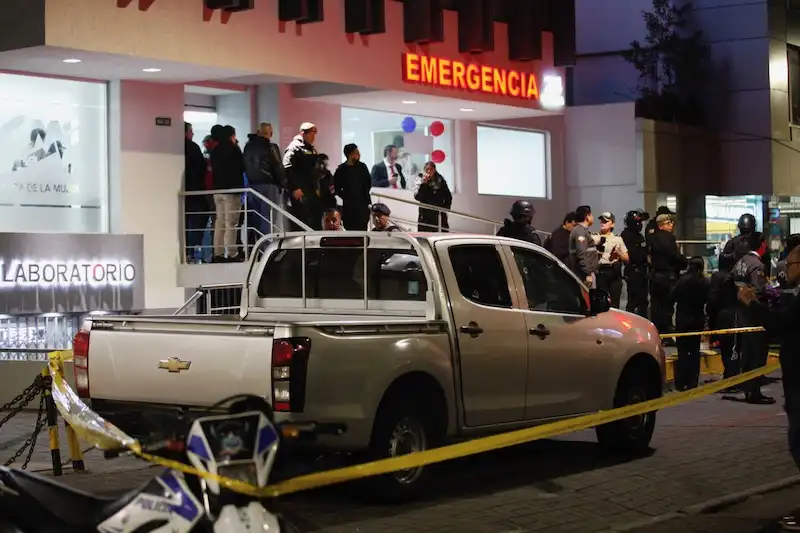


Troops have been deployed across Ecuador as a state of emergency is enforced following the assassination of presidential candidate Fernando Villavicencio. The shocking incident has led to the suspension of Independence Day celebrations and the beginning of three days of national mourning. Villavicencio, who was seen as a strong contender for the upcoming presidential elections, was ambushed and killed as he left a campaign event in Quito. The attackers engaged in a shootout with the candidate's bodyguards and also attempted to detonate a hand grenade, which fortunately failed to explode.
In response to the violence, President Guillermo Lasso has declared a 60-day state of emergency. He has instructed the armed forces to mobilize throughout the country, ensuring the safety of citizens and the guarantee of free and democratic elections in August. The assassination of such a high-profile figure, who had received repeated death threats and was under police protection, highlights the increasing challenge Latin America faces in controlling organized crime and political violence.
The killing has plunged Ecuador's already unstable political environment into further turmoil. The snap elections were called after President Lasso dissolved Congress in May, in the face of impeachment. A poll conducted on the day of Villavicencio's murder placed him in second position among the eight candidates, trailing behind socialist front-runner Luisa Gonzalez. The assassination is seen as a significant blow to Ecuador's democracy, with some describing it as a coup carried out by criminal organizations.
In the aftermath of the tragedy, other presidential candidates, including former Vice President Otto Sonnenholzner and Indigenous leader Yaku Perez, have called for national unity and the formation of a governance pact to navigate the deepening crisis. Villavicencio, a well-known journalist and former legislator, gained prominence for exposing corruption scandals and advocating for tougher stances on drug cartels and foreign oil and mining companies.
The incident has brought attention to Ecuador's battle against drug cartels, as the country has become a key transit point for cocaine smuggling to the United States and Europe. The murder rate in Ecuador has surged by more than 300% in the past five years as rival cartels fight for control of smuggling routes. Villavicencio's death raises concerns about the impact on the upcoming election, as candidates have made law and order a central theme in their campaigns.
The assassination of Villavicencio is a tragic event that has shocked the nation and drawn international attention. It poses significant challenges for Ecuador's political landscape and highlights the urgent need to address organized crime and violence in the region. As the investigations unfold, the country must find a way to move forward and restore confidence in its democratic processes.