


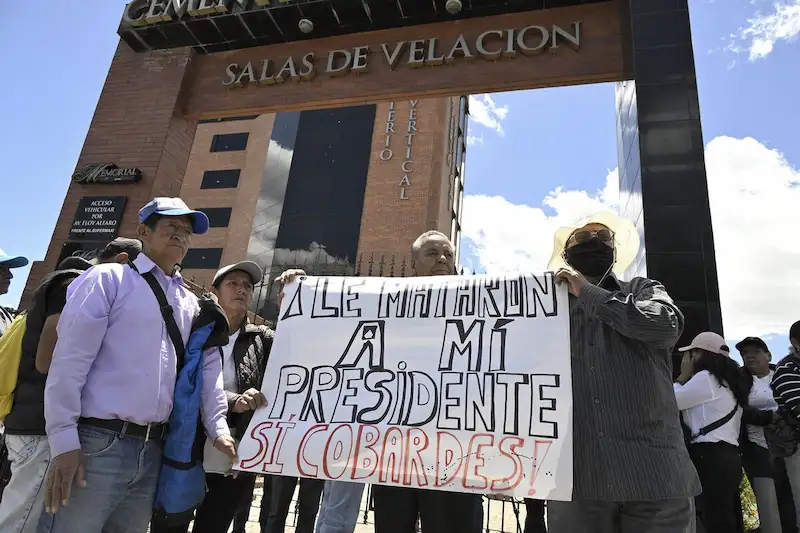


The shocking assassination of investigative journalist and presidential candidate, Fernando Villavicencio, has brought unwanted attention to Ecuador. Once known for its tranquility, the country is now facing the harsh reality of becoming a narco-state. The recent seizure of a massive amount of cocaine hidden in a shipment of bananas from Ecuador further highlights the country's descent into drug-related violence. The FBI has even stepped in to assist with the investigation, as six Colombians have been arrested in connection to Villavicencio's killing.
The impact of this brutal act of political violence on the upcoming elections cannot be understated. The issue of security was already a top concern among voters, but now, with the assassination of a prominent anti-graft crusader, the tone and direction of the race are likely to shift. The question now arises whether the electorate will gravitate towards candidates who take a tough stance on crime.
The Ecuadorian people are deeply saddened and outraged by Villavicencio's murder. However, it is worth noting that they have become somewhat desensitized to the rampant violence that plagues their country. Kidnappings, car bombs, and contract killings have sadly become a part of daily life, making Ecuador one of the most violent places in the world.
Villavicencio's fate was unfortunately predictable. He had received numerous threats for openly challenging the cocaine cartels and vowing to fight them, regardless of the consequences. Just three days after defiantly proclaiming that "we survive by casting out fear," he was brutally murdered. Now, the nation must engage in soul-searching, as their democratic institutions and the will of the people are put to the test. Investors, too, are closely monitoring the situation.
This tragic event in Ecuador parallels similar experiences in Mexico and Colombia. The assassination of Luis Donaldo Colosio during Mexico's 1994 election and the peak of the Colombian drug war in the late 1980s serve as reminders of the challenges faced by nations grappling with organized crime. The region as a whole is currently undergoing a moment of reckoning, with elections taking place in Ecuador, Guatemala, and Argentina, all amidst rising concerns about crime.
Villavicencio joins the long list of journalists who have been targeted for standing up against dangerous forces in Latin America and beyond. The cases of Alexei Navalny in Russia and Daphne Caruana Galizia in Malta, who both paid the ultimate price for their dedication to uncovering corruption, serve as stark reminders of the dangers faced by those who challenge the status quo.
Ecuador's porous borders have allowed record volumes of cocaine from Colombia to flow through the country. This illicit trade has sparked a battle among rival gangs for control over routes and territory. Ecuador now finds itself facing what Colombia endured in the 1980s and what Mexico suffered in the 1990s. Drug trafficking has infiltrated every aspect of society, and the consequences have been dire. The homicide rate has skyrocketed, with Ecuador becoming more violent than even Colombia and Mexico.
Certain regions of the country have become no-go zones, with gangs tightening their grip and extorting money from truckers and businesses. Bus attacks and murders have become common occurrences. Villavicencio had advocated for a tough stance against mafia bosses, but the question of how far to go in restoring order becomes even more difficult in the wake of his death. El Salvador's President Nayib Bukele has earned popularity for his aggressive crackdown on crime, but at what cost to due process and human rights?
Fernando Villavicencio was a courageous and honest leader in Ecuador. His death has left a void in a country desperately in need of such figures. As the nation mourns this tragic loss, it must confront its own darkness and find a path towards a safer and more secure future.