


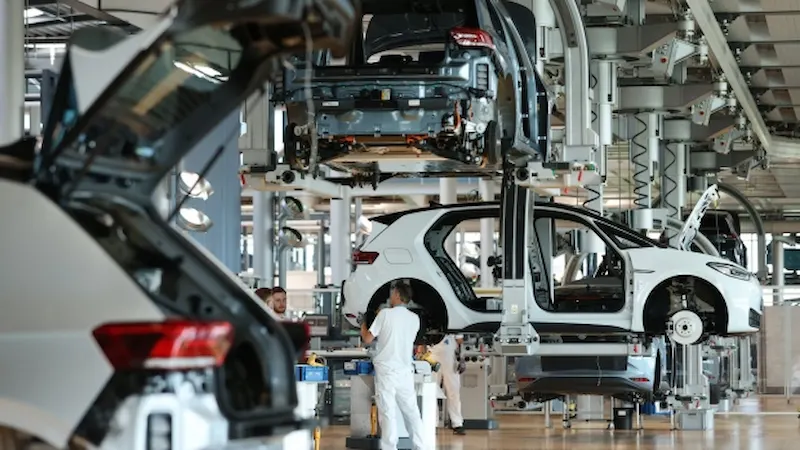


Volkswagen AG is scaling back production of electric vehicle models at two of its German plants as a result of decreasing demand and reduced government subsidies in Europe. The production of Volkswagen's ID.3 and Cupra's Born electric models will be reduced at the company's main EV factory in Zwickau until October 16th. Additionally, assembly of the ID.3 at a smaller-scale plant in Dresden will be halted for the first two weeks of October.
VW is currently in discussions with local labor representatives to determine how production in Zwickau will proceed in the second half of October. However, assembly in Dresden's Glaeserne Manufaktur will return to normal during that period.
The dampened market demand for electric vehicles in Europe stems from various factors, including rising energy, living, and borrowing costs, as well as consumer apprehensions regarding charging infrastructure and battery range. Furthermore, the German government's decision to end subsidies for electric cars in company fleets this month has impacted the market. However, this move did lead to a significant 171% increase in new EV registrations in August compared to the previous year, as reported by Germany's VDA auto lobby.
In light of these circumstances, Germany has been advocating for the continued use of internal combustion engines under the European Union's climate plans, utilizing alternative fuels known as e-fuels.
Volkswagen recently announced the layoff of 269 temporary workers in Zwickau, as their contracts are set to expire soon. The decline in orders for company cars, which accounted for approximately 70% of VW-branded EVs manufactured in Zwickau, is a direct result of the subsidy phase-out. As a result, the company has decided to curb production in order to align with current market conditions.