


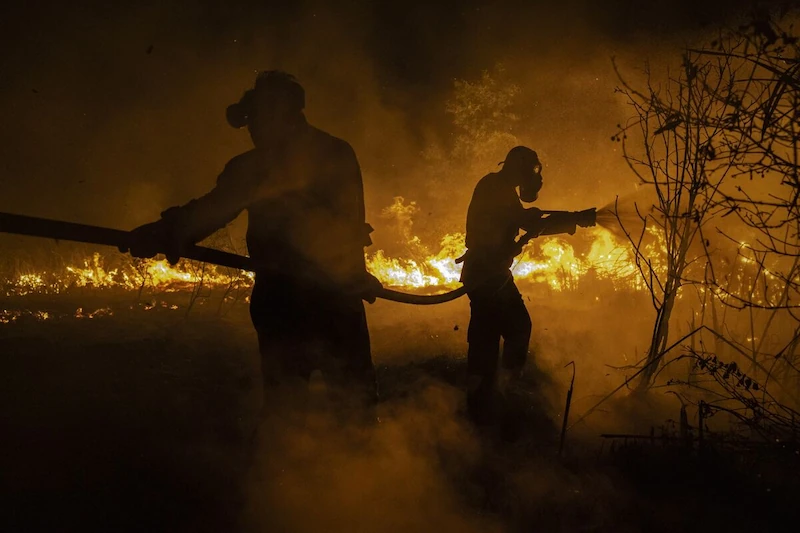


Indonesia is facing a race against time as firefighters battle to extinguish forest and land fires that have engulfed parts of the country. The scorching weather, exacerbated by an El Nino dry spell, has worsened the situation, with experts predicting that the peak of the dry season will hit this month.
Efforts to combat the wildfires have achieved some success, with eight out of 44 incidents in southern Sumatra now extinguished, according to the Ministry of Environment and Forestry. Ground extinguishing and water bombing operations are currently in progress to tackle the remaining fires.
In Central Kalimantan, the Indonesian part of Borneo, firefighters are working tirelessly to put out the forest and land fires within the next two to three days. This is especially crucial as some incidents have occurred near a road and a school. The province has reported 147 hot spots, categorized as medium to high severity.
The Meteorological, Climatological, and Geophysical Agency of Indonesia warns that the risk of forest and land fires remains high, especially considering the lack of recent rainfall in many areas of the country. To mitigate this, the government is implementing cloud seeding to induce rain, which will help keep the peat wet and replenish reservoirs necessary for water bombing operations.
The recurring issue of smoke from fires has had a severe impact on Southeast Asia, disrupting tourism and causing significant economic losses for local communities. The source of the smoke is typically natural fires or those deliberately set for agricultural purposes in Indonesia and neighboring Malaysia, particularly during periods of dry weather.
Malaysia has attributed the haze and worsening air pollution in the western parts of the country to the current fires in Indonesia. Hot spot clusters in southern Sumatra and Jambi are releasing moderate to thick smoke, which is being blown northwestward. Additionally, thick smoke plumes from hot spots in parts of Kalimantan could lead to haze in Sarawak, according to the Malaysian environment department.
Consequently, the department has stepped up enforcement and intensified daily monitoring in areas at risk of fires. The public has been reminded not to conduct any burning activities or allow burning on their land.
Amidst these escalating tensions, Malaysia accused Indonesia of causing transboundary haze. However, Indonesia's environment minister, Siti Nurbaya Bakar, responded by dismissing the claims and advising Malaysia against making careless statements.