


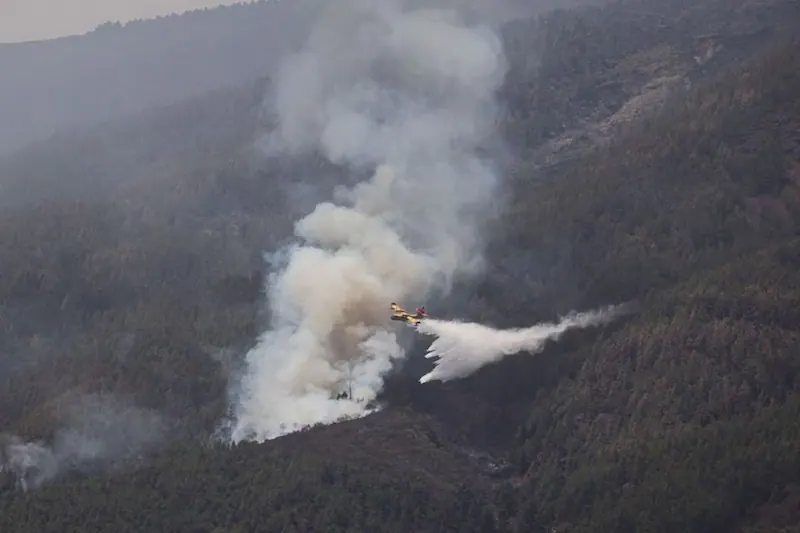


Over 3,000 residents of Tenerife, a Spanish island, were forced to evacuate their homes as a fierce wildfire spread through a forested area already devastated by a fire in August. The blaze, ignited on Wednesday, was exacerbated by high temperatures and strong winds, prompting emergency services to declare a high-level emergency. Seeking assistance from the army's Military Emergency Unit, authorities expressed concerns that more fires could be reactivated due to the persistent heatwave.
In August, a raging wildfire burnt for days, consuming approximately 15,000 hectares of woodland within the national park surrounding Mount Teide, Spain's highest peak. During that incident, thousands of residents were also evacuated, and while most returned home safely, the devastation left its mark. "The temperatures will remain higher (than usual), so we expect more fires to be reactivated in the area," warned Rosa Davila, the head of Tenerife's local government.
The current wildfire has already affected around 30 hectares of land since Wednesday evening. Davila refrained from providing an estimation on when those evacuated can return to their homes but emphasized the severity of the situation. The island of Tenerife, situated in the Canary Islands, is on alert due to high temperatures forecasted to reach 39 degrees Celsius (102.2 degrees Fahrenheit) throughout Thursday.
Spain's national weather service, AEMET, reported a record six consecutive days of unseasonal heat between September 28 and October 4. Furthermore, climate scientists have linked rising temperatures and dry, windy conditions to climate change, not only in southern Europe but also across various parts of the world.
Although the August fire had been brought under control, it was never completely extinguished, with embers still smoldering in the forest. Typically, it takes several months of rainfall and increased humidity to fully extinguish a large wildfire. Unfortunately, the current above-average temperatures pose a challenge, making it more difficult to combat the blaze. The stable dry weather further heightens the risk of fires and prolonged drought.
Despite the trying circumstances, Fernando Clavijo, the regional leader of the Canary Islands, remains cautiously optimistic about bringing the wildfire under control. He believes that the blaze on the already scorched terrain poses less of a threat due to diminished fuel. However, authorities remain vigilant and continue to deploy significant resources to combat the fire.
While wildfires in Spain and neighboring Portugal are more common during the summer months, they are relatively rare in autumn. However, in October 2017, both countries experienced a devastating wave of hundreds of large-scale blazes, resulting in the loss of 45 lives in Portugal and four in Spain. The current resurgence of wildfires serves as a grim reminder of the ongoing challenges faced by authorities in preventing and managing such disasters.