


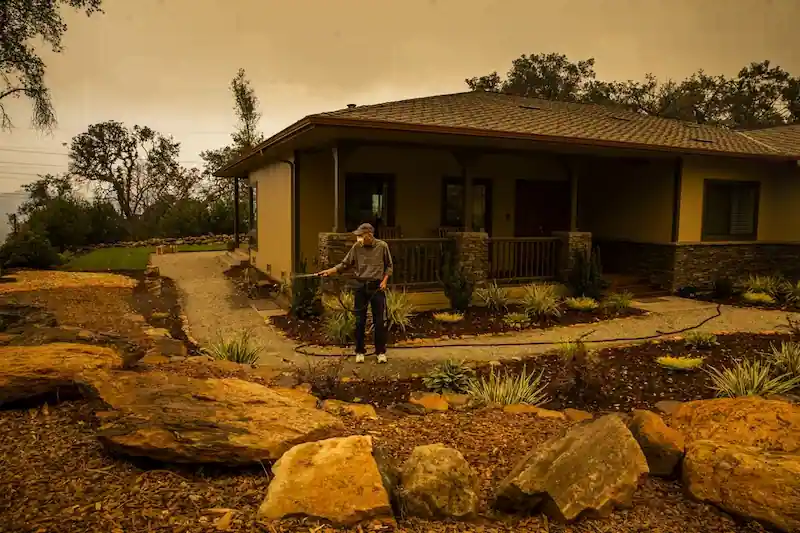


When wildfire smoke blankets a town, the immediate response is to seek shelter indoors and seal off any possible entry points for smoke particles. However, the harmful gases present in wildfire smoke can still seep through cracks in windows and foundations, posing a long-lasting threat to human health. A recent study published in Science Advances indicates that even after the smoke dissipates, these gases can settle on surfaces and continue to pollute the indoor air. The good news is that simple cleaning measures such as dusting, mopping, and vacuuming can significantly reduce this risk, providing an effective solution for homeowners.
Wildfire smoke consists of particulate matter, including tiny particles that can cause inflammation, breathing difficulties, and other health issues. While the detrimental effects of ingesting particulate matter are well-documented, the study emphasizes the dangers of the volatile organic compounds (VOCs) found in wildfire smoke. Until now, little research has been conducted on how these gases interact within homes and how to effectively eliminate them.
Researchers conducted an experiment by releasing smoke similar to that produced by wildfires into a two-story, minimally furnished house. They painstakingly monitored the behavior of VOCs within the indoor environment. The study reveals that VOCs tend to settle on various surfaces, such as floors, counters, and walls, and are subsequently absorbed. Even after the smoke dissipates, these gases continue to be emitted into the air, potentially leading to long-term indoor air pollution.
While air filters and purifiers may be effective in reducing particulate matter, they seem to have limited impact on eliminating VOCs. The study suggests that opening windows and doors also fails to adequately address these gases. However, to the researchers' surprise, a combination of simple household cleaning methods proved to be highly effective in reducing the presence of VOCs in the indoor air.
The researchers stress the importance of thorough cleaning practices within days to weeks of exposure to wildfire smoke. Dusting, vacuuming, mopping, and using common cleaning products can adequately remove VOCs from surfaces, preventing their re-emission into the air. Importantly, caution should be exercised in choosing cleaning solutions, avoiding the use of oxidizing agents like bleach or chlorine-containing compounds, as they may produce unpredictable reactions.
When dealing with the aftermath of wildfire smoke, it is crucial to recognize the potential long-term threat posed by the lingering gases. While filtering systems and air purifiers play their role in eliminating particulate matter from the indoor environment, they fall short in addressing VOCs. By following basic cleaning practices using conventional household products, homeowners can effectively mitigate the risks associated with the re-emission of these harmful gases into the air. By emphasizing the importance of regular cleaning after exposure to smoke events, individuals can safeguard their homes and promote healthier indoor air quality.