


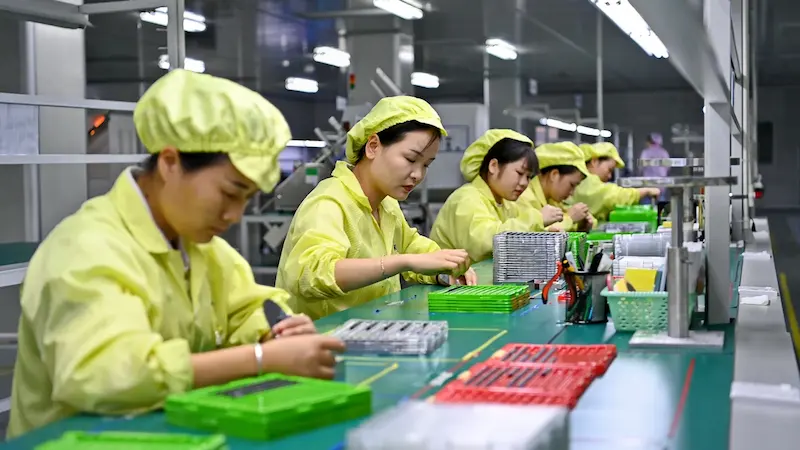


China's manufacturing sector experienced another contraction in October, highlighting the need for stronger policy support to boost the country's economic growth. The official manufacturing Purchasing Managers' Index (PMI) dropped to 49.5 in October, missing expectations of 50.2, according to the National Bureau of Statistics (NBS). The non-manufacturing PMI, which covers services and construction industries, also fell to 50.6, the lowest level since Covid-19 restrictions were lifted in December 2022.
The contraction in the manufacturing sector not only reflects the impact of the Golden Week holiday in October, but also underscores the fragility of China's economy. The country is facing numerous challenges, including weak consumer spending, a deepening property crisis, and subdued global demand.
The manufacturing sector, which constitutes 28% of the country's GDP, had been contracting for five consecutive months before finally expanding in September. This expansion had raised hopes that the economy had bottomed out, but the unexpected decline in October's manufacturing PMI suggests a bumpy road to recovery due to weak domestic demand.
The NBS survey revealed a decline in new factory orders in October, indicating a drop in demand. Additionally, the employment sub-index also dropped, implying that factories were hiring fewer workers. The non-manufacturing PMI's decline further suggests that pent-up demand for travel and gatherings diminished quickly after the Golden Week holiday.
Overall, the weak PMI figures reinforce the need for stronger fiscal policy support. To stimulate the economy, Beijing has recently implemented various stimulus measures. These include approving a 1 trillion yuan ($137 billion) sovereign bond issue for infrastructure projects in disaster-hit areas, as well as easing property measures in several cities to encourage homebuying.
President Xi Jinping's financial policy meeting, the first in six years, is currently underway to discuss ways to spur growth and resolve financial risks, such as the mounting debt among local governments. Analysts expect a combination of proactive fiscal and accommodative monetary policies, including a 50 basis point cut in the reserve requirement ratio, which could inject 1.2 trillion yuan ($164 billion) into the financial system.
In conclusion, China's manufacturing sector contracted in October amidst weak demand, signaling the need for stronger policy support. The declining PMI figures underscore the challenges faced by the second-largest economy in the world and highlight the importance of fiscal stimulus measures to revive growth.