


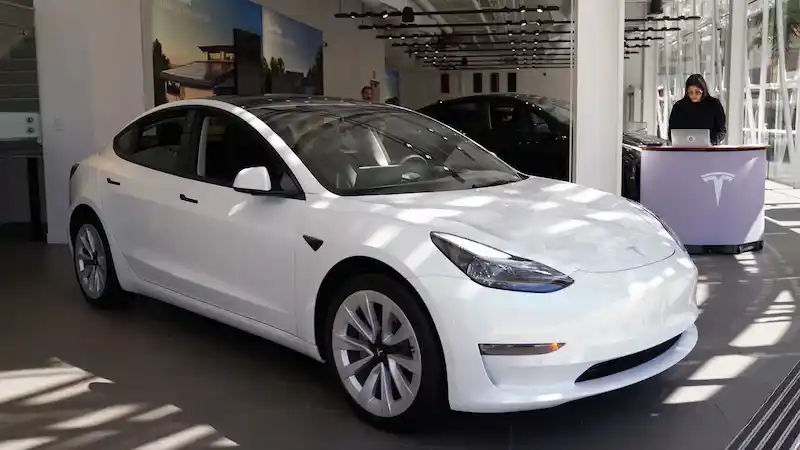


The US Treasury Department has released a list of electric vehicles (EVs) eligible for new tax credits. The updated rule means that consumers can receive up to $7,500 in tax credits on eligible cars. However, fewer models are eligible under the new subsidy than in previous years, with nine models from foreign brands, including Hyundai and Nissan, no longer eligible. Nevertheless, some of the most well-known EVs still qualify, including most of the eligible cars made by Ford, General Motors, Stellantis, and Tesla. The list of eligible new and used EVs will be updated/
The Inflation Reduction Act, passed by Congress last year, is the basis of the new Treasury rule. The rules aim to move the supply chain for critical minerals, such as lithium, nickel, graphite, and copper, away from China. Two major requirements must be met if automakers want their EVs to be eligible for the $7,500 tax credit: a critical mineral requirement and a battery component requirement, each worth $3,750. The critical mineral requirement mandates that a certain percentage of the value of critical minerals that power EV batteries must be extracted or processed in the US or a country with which it has a free-trade agreement, or recycled in North America. The battery component requirement mandates that a certain percentage of the value of the battery components must be manufactured or assembled in North America.
The requirements will ramp up over several years. For critical minerals, the percentage will start at 40% in 2023 and ramp up each year to 80% by 2027. For battery components, the percentage will start at 50% and ramp up each year to 90% by 2028. Administration officials and experts agree that the rules are incredibly complicated to implement in a very short timeframe.
Twenty-one countries, including Australia, Canada, Korea, Mexico, and Japan, will have free-trade agreements on critical minerals with the US. The US is also negotiating adding the European Union to the list, and others could be added in the future. However, standing up a critical mineral supply chain - mining and refining critical minerals - will be the most difficult aspect to change as China currently has a tight grip on it. The US has just a few lithium mines, located in Nevada, and companies are vying to start mining lithium around California's Salton Sea, though no commercial operations have started yet.