


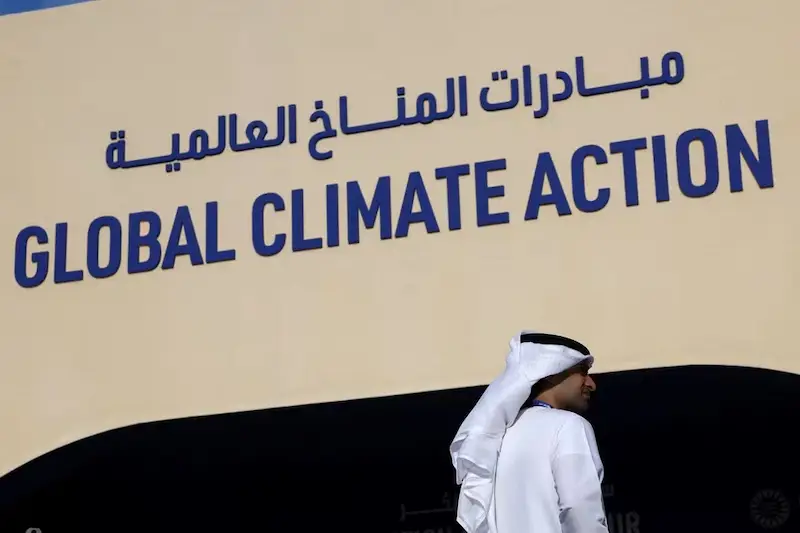


The United Nations climate summit, COP28, started off on a positive note as delegates reached an early victory by adopting a new fund aimed at assisting impoverished nations in coping with the devastating impacts of climate disasters. The decision to establish the fund on the first day of the two-week conference has paved the way for governments to announce their contributions. Several countries have already made commitments, with the United Arab Emirates offering $100 million, Britain pledging at least $51 million, the United States giving $17.5 million, Japan contributing $10 million, and the European Union pledging a substantial $245.39 million, which includes a $100 million commitment from Germany.
The establishment of the "loss and damage" fund, as it has been informally referred to over the past two years, fulfills a long-standing demand from poorer nations. This early breakthrough could potentially facilitate further compromises and negotiations during the course of the summit. Alden Meyer, from the think tank E3G, emphasized that the approval of the fund meant that neither side could manipulate it as a bargaining chip tied to other issues.
The global stocktake, which is an assessment of countries' progress towards meeting the Paris Agreement's goal of limiting global warming to below 2 degrees Celsius, is another crucial aspect of the summit. With the adoption of the fund, delegates can now focus on the global stocktake and the transition away from fossil fuels towards renewable energy, according to Jennifer Morgan, Germany's special climate envoy.
However, some groups remain cautious about celebrating the early adoption of the fund, highlighting unresolved issues such as its long-term financing. Harjeet Singh, head of global political strategy at Climate Action Network International, raised concerns about the absence of a defined replenishment cycle, which raises questions about the fund's sustainability in the future.
Securing significant financial contributions for the climate disaster fund is a priority for the COP28 summit. Adnan Amin, CEO of the conference, aims to gather several hundred million dollars for the fund during the event. Unfortunately, Pope Francis, who was expected to attend COP28, had to cancel his trip due to illness. However, he expressed his hopes that the participants would prioritize the common good and the future of their children, rather than the vested interests of certain countries or businesses.
In the opening address of the summit, COP28 President Sultan Ahmed al-Jaber urged countries and fossil fuel companies to collaborate in achieving global climate goals. Discussions will focus on whether to agree, for the first time, to phase out the use of coal, oil, and gas, the primary sources of greenhouse gas emissions. Al-Jaber, who is also the CEO of the United Arab Emirates' national oil company, ADNOC, acknowledged the differing opinions surrounding the inclusion of language regarding fossil fuels and renewables in the negotiated text. He emphasized the need to address all relevant issues and advocated for the inclusion of the role of fossil fuels while acknowledging that more needs to be done by the industry to combat climate change.
With the early success of the climate disaster fund and a call for collaboration between governments and fossil fuel companies, COP28 sets the stage for critical discussions and negotiations on climate action, ultimately steering the world towards a more sustainable and resilient future.