


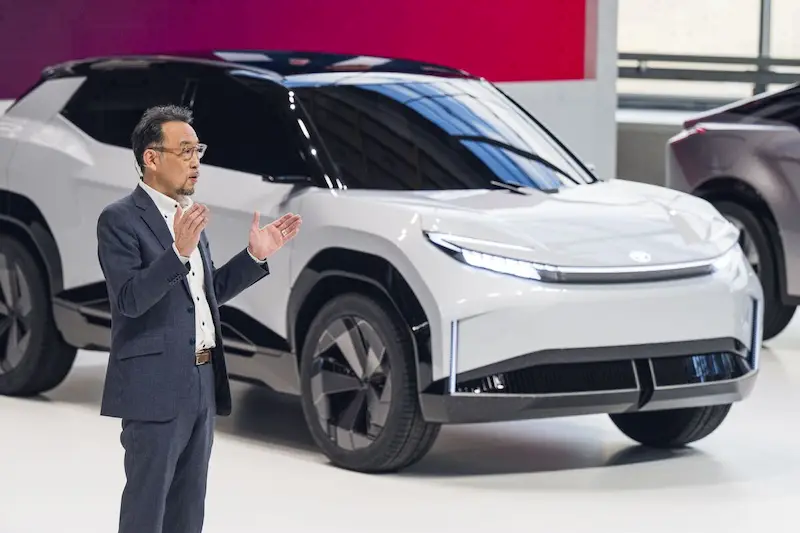


Toyota Motor Corp. believes that Europe is approaching a tipping point for electric vehicle (EV) adoption, but certain key ingredients are still missing. However, the automaker is considering localizing production in the region as it prepares to offer around 15 different zero-emission vehicles by 2026. Yoshihiro Nakata, CEO of Toyota Europe, stated that the company expects to deliver more than 250,000 battery-electric vehicles in Europe by that time.
Toyota has traditionally been cautious about localizing production outside of Japan. Interestingly, the company has yet to assemble its groundbreaking hybrid car, the Prius, overseas, even after 26 years. Toyota began manufacturing its first gas-electric model in Europe a decade after Prius imports started.
Despite these hesitations, Toyota's willingness to disclose a rough start date for local production reveals a positive industry trend. While Europe still needs to address challenges like establishing a robust battery supply chain, expanding charging infrastructure, and developing a used EV market, several factors are working in its favor. The region boasts environmentally conscious car buyers and policymakers with ambitious emissions-reduction goals.
Toyota's growing confidence in the medium-term outlook for EVs is marked in contrast to other European automakers struggling to sell electric vehicles. Industry competitors Mercedes-Benz, Volkswagen, and Renault have faced various setbacks in the EV market recently. Toyota's strategy of focusing on hybrid vehicles has allowed it to avoid penalties thus far, with an order bank of over 300,000 vehicles in Europe and expectations of continued sales growth in the coming year.
While Stellantis CEO Carlos Tavares is concerned about potential policy shifts following the European Parliament elections in June, Toyota's Chief Operating Officer Matt Harrison reassures that any leadership changes are unlikely to lead to significant disruptions. Despite fluctuations in political landscapes, Harrison believes that European consumer behavior and responsibility towards the environment will remain steady.
In conclusion, Toyota's projection of local production in Europe indicates the region's progress towards widespread EV adoption. While challenges remain, Europe's growing focus on sustainability and continuously evolving infrastructure suggests a promising future for electric vehicles.