


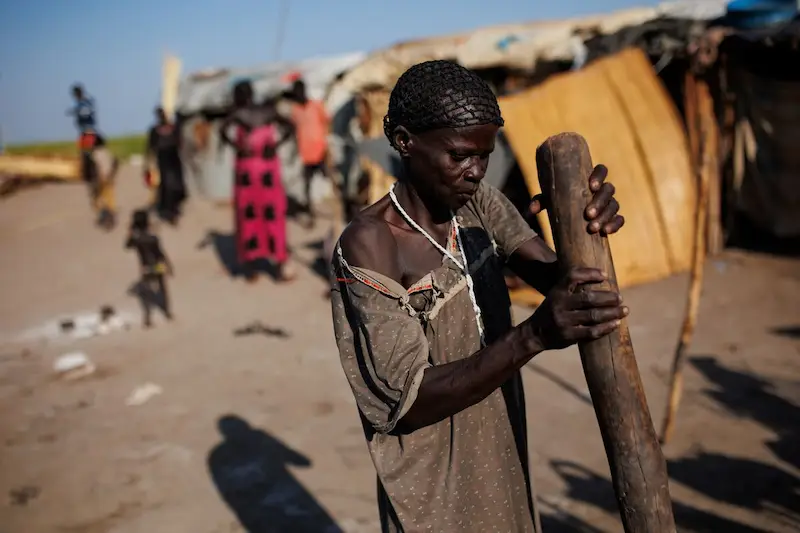


Africa is facing an unprecedented food crisis, with over 280 million people going hungry, according to a joint report by the United Nations' Food and Agriculture Organization, the World Food Program, the African Union, and the UN Economic Commission for Africa. The situation has worsened significantly since 2019, with a rapid deterioration occurring between 2019 and 2022. Contributing factors include the impact of climate change and the repercussions of the conflict in Ukraine.
The report highlights that the number of undernourished people in Africa has increased by a staggering 57 million since the onset of the Covid-19 pandemic in 2020. This escalation has been particularly devastating for a region that is already home to some of the world's poorest communities. The soaring prices of food and fuel following Russia's invasion of Ukraine in 2022 have had a severe impact on African nations, compounding the existing challenges related to food security.
Extreme weather events, such as droughts and flooding, have further exacerbated the situation for African farmers, disrupting food supplies and driving prices even higher. These events are strongly linked to the effects of climate change, making it increasingly difficult for communities to secure an adequate food supply. The combination of rising prices and the scarcity of food has resulted in public anger, leading to violent demonstrations and political instability in parts of Africa. This year, West Africa, in particular, has witnessed a wave of military takeovers and coup attempts partly fueled by frustration over food prices.
According to the joint report, an estimated 868 million Africans are facing moderate to severe food insecurity, with more than a third falling into the latter category. Shockingly, 78% of Africa's population cannot afford a healthy diet, compared to around half on a global scale. The average cost of a nutrient-rich diet has skyrocketed to $3.77 per person per day, significantly exceeding the threshold for extreme poverty ($2.15). Consequently, an increasing number of individuals who are not classified as poor find themselves unable to afford a healthy diet.
Given this dire situation, the report emphasizes the urgent need for countries to ramp up their efforts to achieve a world without hunger and malnutrition by 2030. This call to action becomes even more crucial considering the projected lower rate of economic growth, soaring inflation, and rising borrowing costs on both domestic and international markets since 2022.
Addressing Africa's deepening hunger crisis requires a comprehensive approach that addresses the underlying causes. This includes coordinated efforts to mitigate the impact of climate change, provide support to farmers, stabilize food and fuel prices, and ensure access to nutritious food for all segments of the population. Without immediate intervention, Africa's hunger crisis will continue to escalate, posing severe threats to the well-being and stability of the entire region.